Headband No. 2Issue 19 · November 2026Work with me
AndriusK.
Design and software
I design and build software: websites for studios and shops, drafting tools for engineers, apps for reading, learning and training, and now and then a mountain range drawn from survey data. Eighteen projects in five sections, from a 2004 terrain generator to fourteen years at Zeel.
01
Client work
Websites and shops built for others.
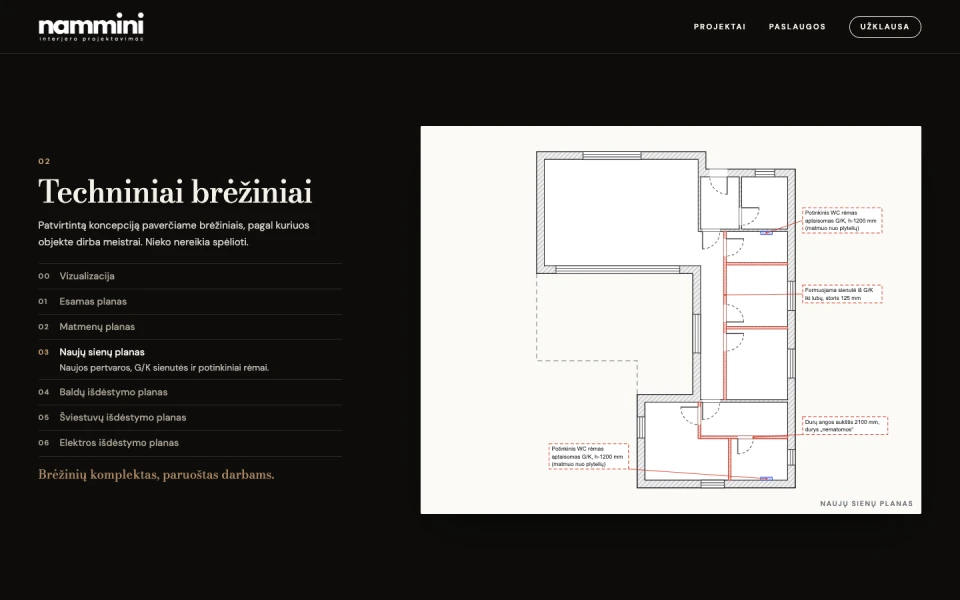
Technical drawings, sheet 3 of 7, building itself as you scroll.
Website · Interior design studio2026
NAMMINI
A portfolio for an interior design studio that shows both halves of the work: the rooms first, then the drawings behind them.
NAMMINI designs interiors from the first measurement to the last light fitting, then oversees the works until every piece is in place. The front page is four rooms standing side by side; point at one and it widens, click it and it grows to fill the screen and opens into its project without the picture ever jumping.
The studio's renders came from many projects and many lighting set-ups. Each was relit to the same evening hour, so nine projects read as one body of work. Under the services, a house turns from a picture into its plan and builds up sheet by sheet, down to the wiring. Hand-written pages, no framework, 220 KB to open, 100 for speed on a phone.
Nine projects, one long and very productive afternoon.
Software for surveyors, draughtsmen and translators.
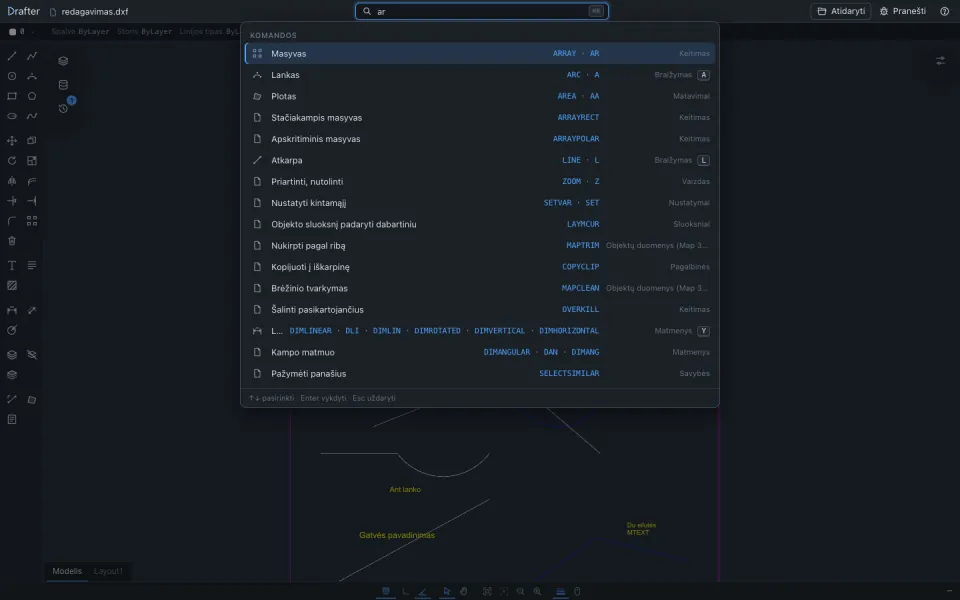
Finding a command: two languages, one set of keys.
Drafting software2026
Drafter
A drawing office in a browser tab: open an AutoCAD file, read it properly, change it, and never install anything.
Drafter opens DWG and DXF files and draws 26 kinds of object the way their author saw them, down to the stroke fonts the text was set in. It is built for land surveyors who turn measurements into plans, and for interior designers who need a clean set for the builders.
Underneath is an engine of its own: a reader compiled to WebAssembly, the drawing kept in flat arrays and drawn on the graphics card, every change in a journal that can be replayed. 91 commands follow AutoCAD's names, keys and order of questions, so twenty years of habit carry straight over. 1,094 tests keep it honest.
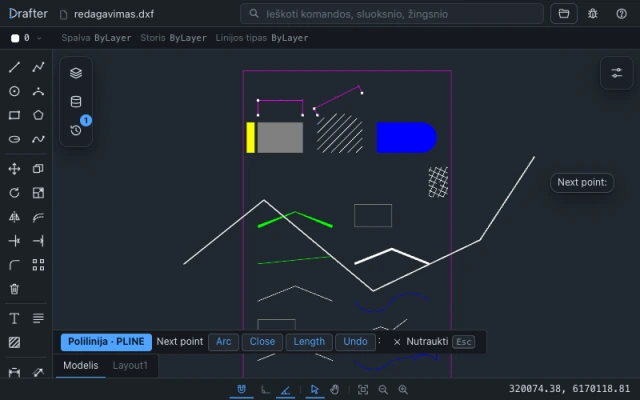
Undo, redo and reloading the page are the same operation.
For reading, learning and training. All in daily use.
Training app2026
Runnin
A training app for runners who run every day and have a mountain to climb, built around the one number they care about: the streak.
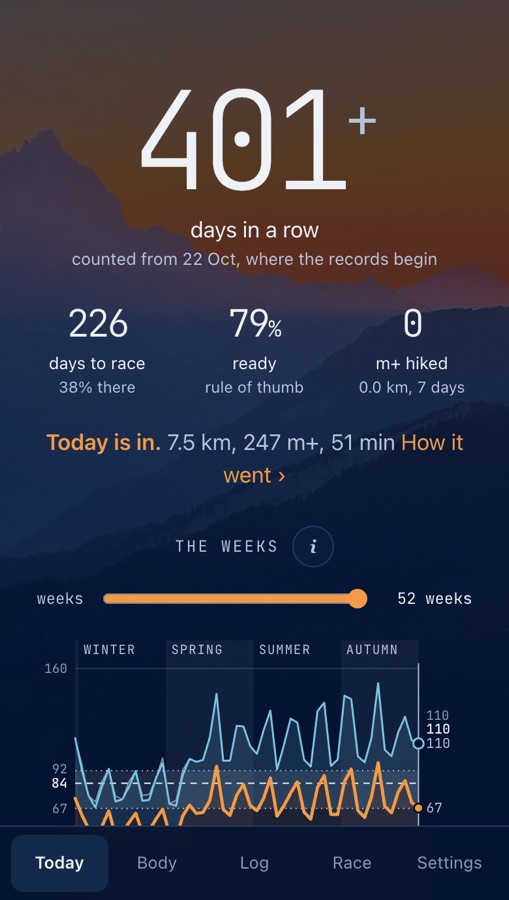
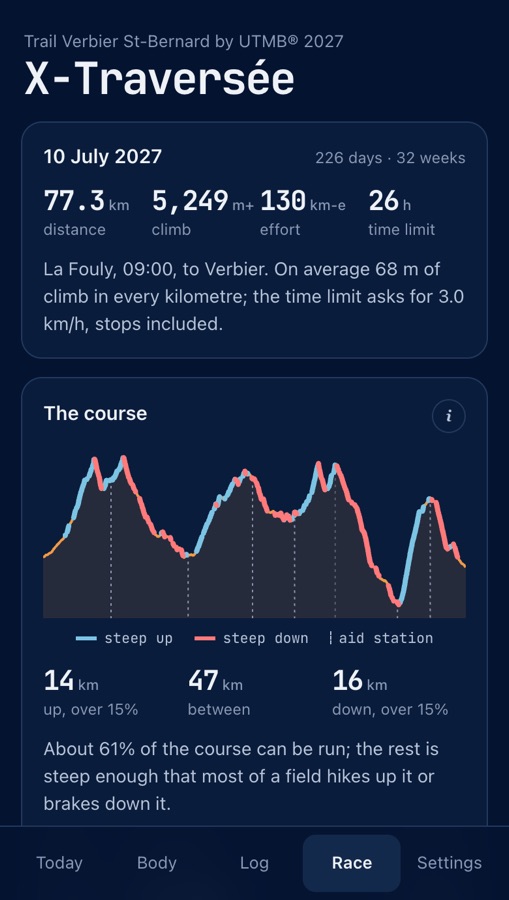
My mountain is the X-Traversée: La Fouly to Verbier, 77.3 km and 5,249 m of climb over five passes, a glacier and a suspension bridge, 26 hours allowed. A quarter of last year's field did not finish. Runnin puts the streak first and never suggests a day off; on a bad day it suggests an easy one.
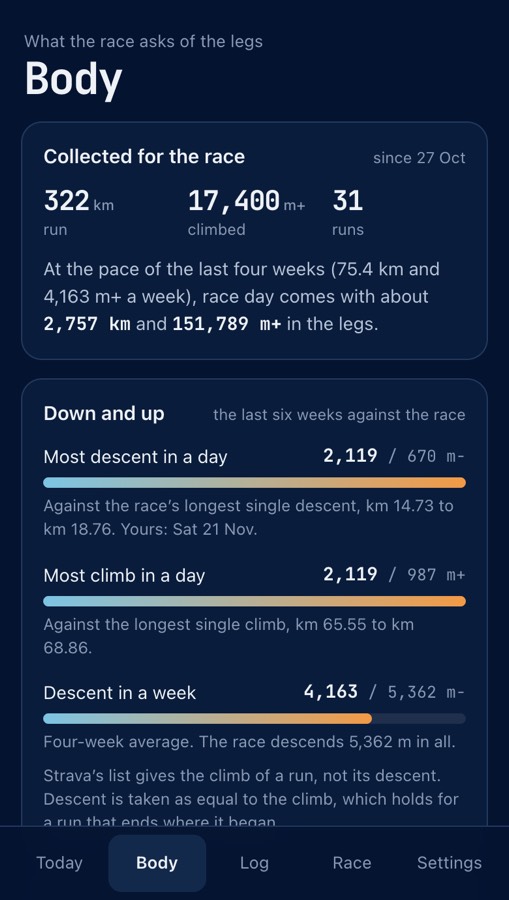
Runs arrive from the watch through Strava every half hour; years of earlier runs came from three companies' downloads, cleaned so a run saved twice counts once. A mountain week is one number: a kilometre per kilometre, plus one per 100 m climbed. The race is 130 of them. The screens show sample data.
It never suggests a day off. On a bad day it suggests an easy one.
The same ground in winter, and the Rhone valley in autumn.
3D map2026
Verbier
The real mountains around Verbier, drawn in a browser from survey data: every house, lift and piste where it is, and the sun where it really stands.
The terrain is the Swiss federal survey's, from the valley floor to Mont Fort, with the aerial photograph laid over it. Houses take their heights and roofs from the laser survey; forests, lifts, pistes and mountain restaurants stand where they stand. Four seasons, and the sun at its real place for the hour.
The ground is a tree of squares that grow finer near the eye, from 1,600 m cells on the far peaks to 5 m close by, with no seam between them. Shadows are traced toward the sun on the graphics card; low cloud fills the valleys. The rule: everything drawn must come from a real source.
Fourteen years of Zeel, a recruiting launch, and where it all started.
Engineering · Zeel Networks, New York2012–2026
Zeel
Fourteen years with one company: from the first line of an on-demand massage site to an event-driven healthcare platform. Four job titles, four redesigns, one codebase that never had to be thrown away.
Commits
~18,000
Codebase
480,000 lines
Tests
1,000+ files
Migrations
1,000+
Team
5–8 engineers
2012
Software Engineer · New York
Massage on demand
I joined Zeel in May 2012 as the sole front-end developer of its first booking site, and took it from zero to a live marketplace in New York City: PHP, jQuery Mobile, a Sass and Grunt pipeline. Around it grew the first everything: real-time two-way texting between customers and therapists, a hybrid Android app for scheduling office and chair massages, and the operations tools the team used every day to stage appointments, credit chairs and run reports.
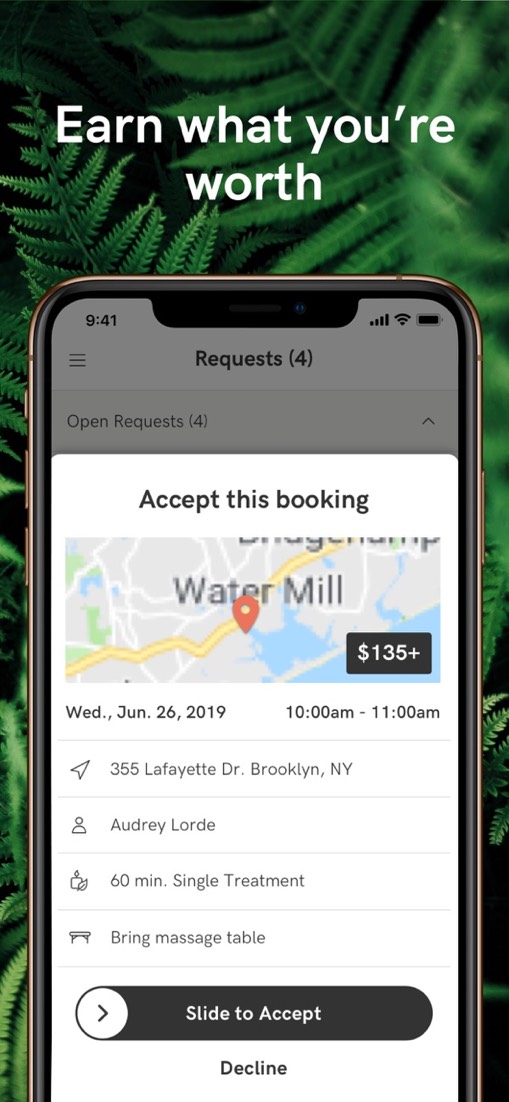
In 2013 I wrote the first provider app, the one therapists used to accept work, in AngularJS on Cordova, from an empty folder to beta in about four and a half months.
zeel.com, May 2013.
2014
Senior Software Engineer · New York
Redesigns, Zeelot and Apple Pay
I led the full-stack redesign of the consumer site: the responsive homepage, the booking flow and the city pricing pages, all on AngularJS. The clean "v4" homepage of 2015 was its public face. I shipped Zeelot, the company's first subscription, end to end: sign-up, billing, pricing rules. Apple Pay went live in 2014, the year it launched; gift cards followed.
Twilio carried the voice of the business: texting, click-to-call and call queues for member services, and chat between members and their therapists. I brought in PHPUnit, test-driven development and continuous integration, and co-wrote the ORM the codebase still runs on.
The January 2014 redesign.The "v4" homepage, 2015.Zeelot, the first subscription, 2014.
2016
Lead Software Engineer · Remote
A team, a cloud, a new business line
Leading from Europe, I built the remote engineering team from the ground up: sourcing, interviews, onboarding. I was technical lead of the move from Rackspace to AWS, where hand-run releases became automated deploys to auto-scaling servers, and put the whole platform in Docker for development and CI.
Chair Events opened a new revenue line: a self-booking API with Salesforce behind it, first for companies booking massage in the office, then for spa partners managing their shifts. Along the way came the PHP 7 upgrade, a rewritten front end, and a schema migration system that has since run more than a thousand migrations.
Corporate wellness, 2017.zeel.com, October 2017.
2018
Senior Lead Engineer / Engineering Manager · Remote
From wellness to healthcare
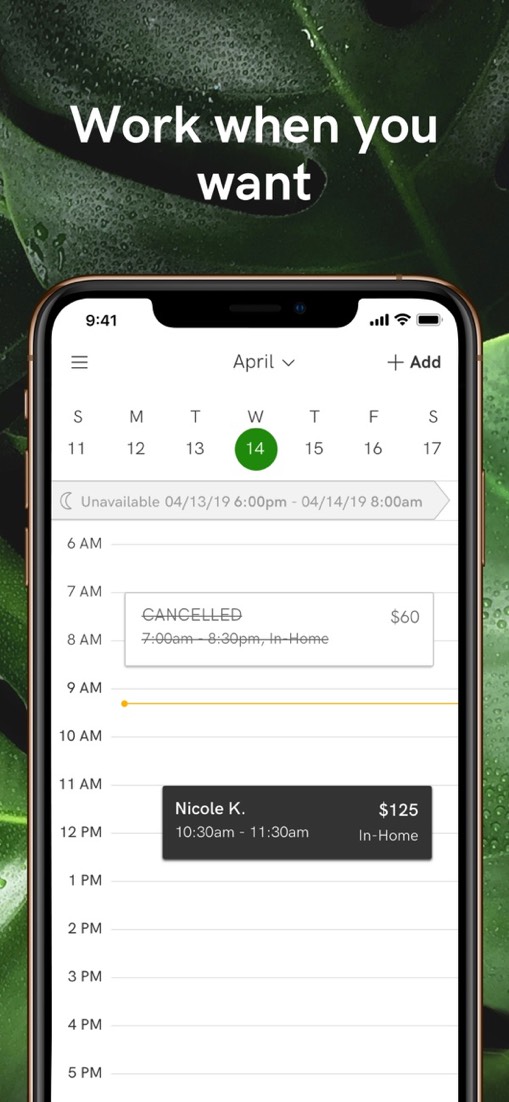
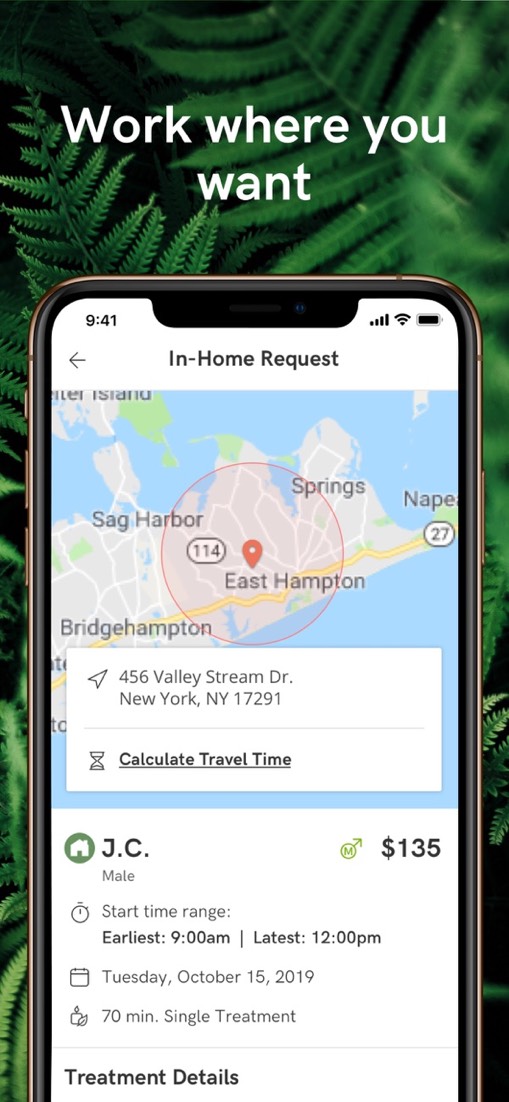
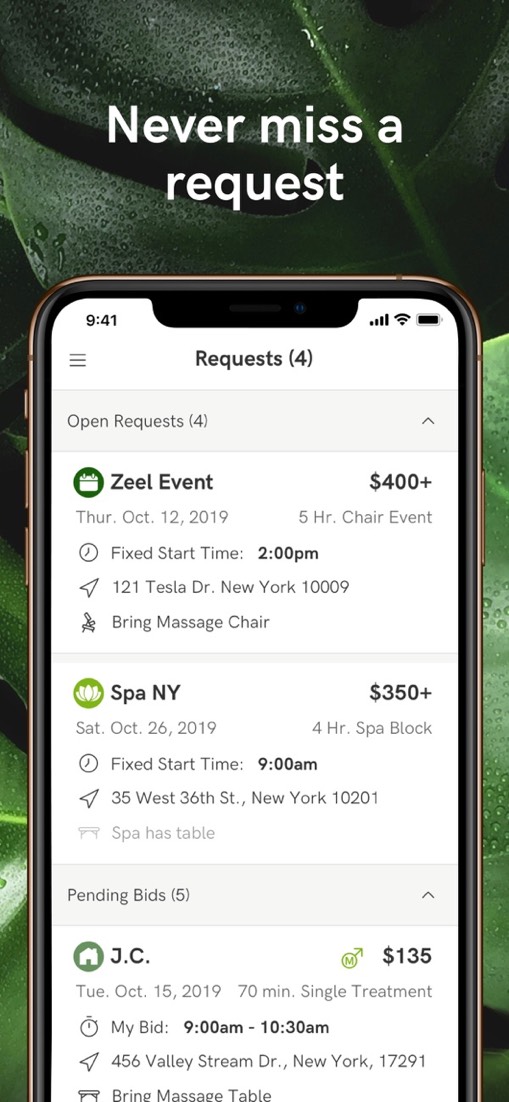
For the last eight years I led all of Zeel's engineering: the PHP platform, the Python services, the web and mobile apps, operations and data, and a team of five to eight engineers across regions. We moved the marketplace onto an event-driven platform of Python services with a FHIR clinical record under HIPAA, without rewriting booking or billing; I connected the PHP core to it. That opened medical lines from 2020: VA referrals and medical massage, then COVID testing and vaccinations, physical therapy and a study for the Department of Defense.
The customer site moved to React and the provider app to one React Native codebase. Payments moved from Braintree to Fortis in 2024, with Apple Pay and Google Pay. In 2025 seventeen services and nine libraries became one repository, and the team started coding with agents under the same test and review rules.
The provider app on the App Store, 2022: the React Native successor of the 2013 app.
All pictures are Zeel's public pages and App Store listing, as the Internet Archive kept them. Read the full story
From the instrument on the tripod to coordinates on the map, in a browser tab, without the vendor's software.
Client
A land survey firm in Klaipeda
Instruments
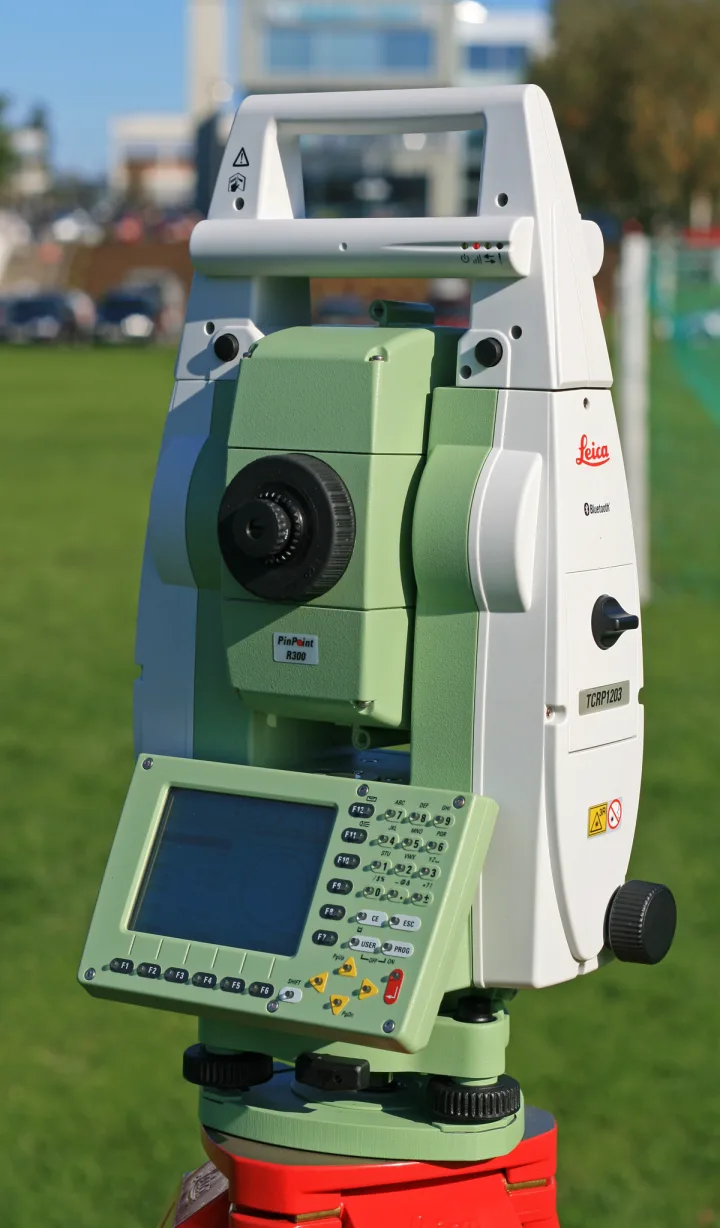
Leica total stations (GSI-8, GSI-16, RAW); a TCR407 over its serial cable
Out
DXF R12, CSV, the firm's old text format
Status
In use since October 2026
A Leica total station: a TCRP1203, the bigger sibling of the firm's TCR407. Photo: Jensens, Wikimedia Commons, public domain.
What it is
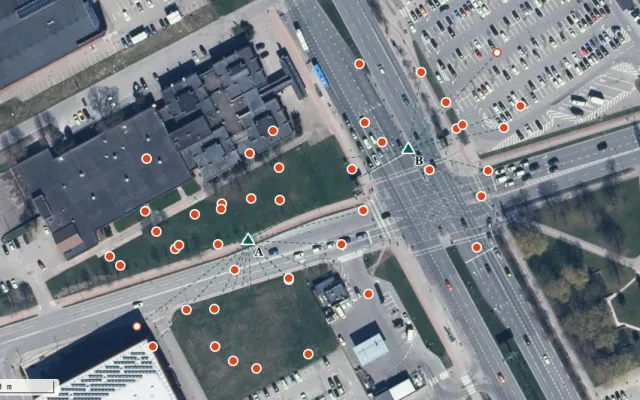
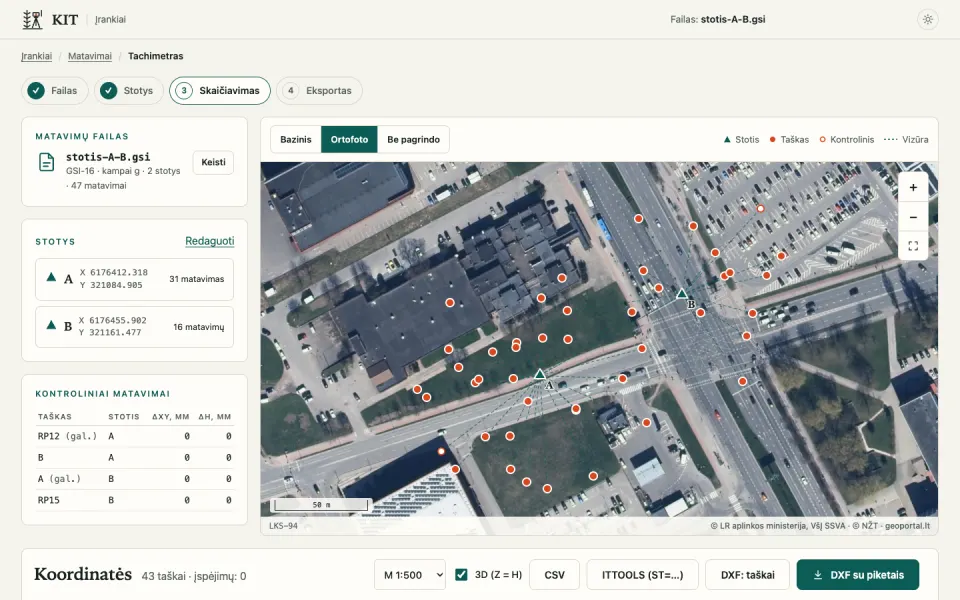
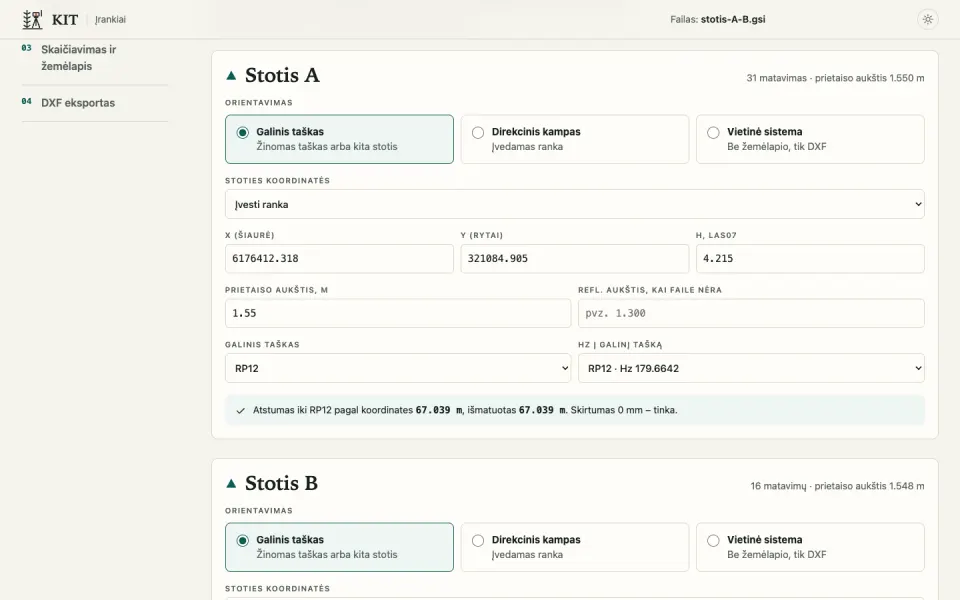
A surveyor comes back from the field with a total station full of angles and distances. This tool turns them into coordinates in the Lithuanian national grid: it reads Leica GSI files in either width and both RAW layouts the old tool knew, sets up each station from a known point and a backsight, computes every point, checks the result on the national orthophoto and exports DXF, CSV or the text the office has used for twenty years.
Two stations, 47 measurements, control residuals of 0 mm. Sample data.Setting up a station. The backsight checks out.
How it works
Everything runs in the browser; the measurements never leave the computer. It corrects for the curvature of the earth and refraction, which the old AutoCAD tool did not, and on a real 152-point field file it gives the same coordinates as that tool to a millionth of a metre. Synthetic jobs worked backwards from known coordinates come back within 2 mm.
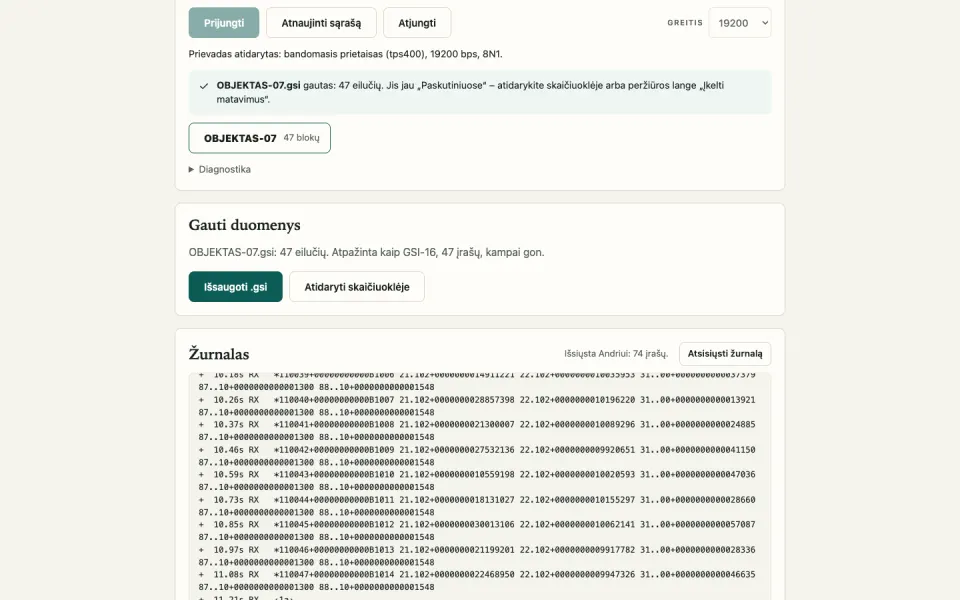
The download page talks to a Leica TCR407 directly over its cable with Web Serial. I recorded the vendor's own program talking to the instrument on the office's old XP machine and taught the page the same five commands; the first real download, 70 records, took 31 seconds.
The vendor's software, replaced by five commands and a cable.
A download from a simulated instrument, with the byte journal.
Why
It replaces an AutoLISP routine I wrote years ago that only rewrote the observations as text. The surveyor now gets coordinates, a map and a check before leaving the office.
A general drafting engine taught the national standard: the plans a surveyor hands to the state register, drawn and checked in a browser.
Standard
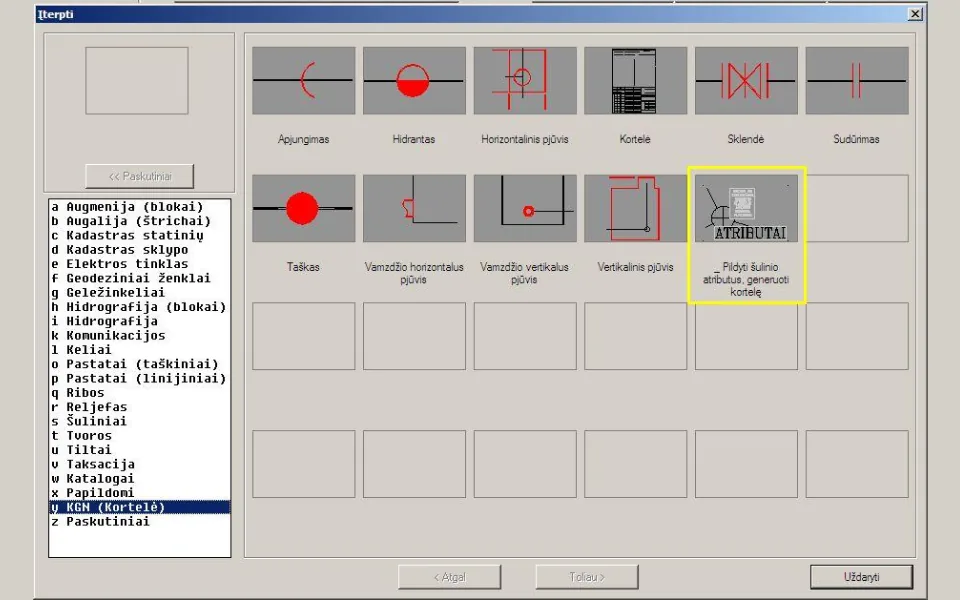
GKTR 3.01:2023: 472 codes, 471 symbols
Checks
27 rules from the standard and the register's manual, plus 726 topology rules
Built on
The engine behind Drafter
Tests
About 730 unit and 127 browser tests
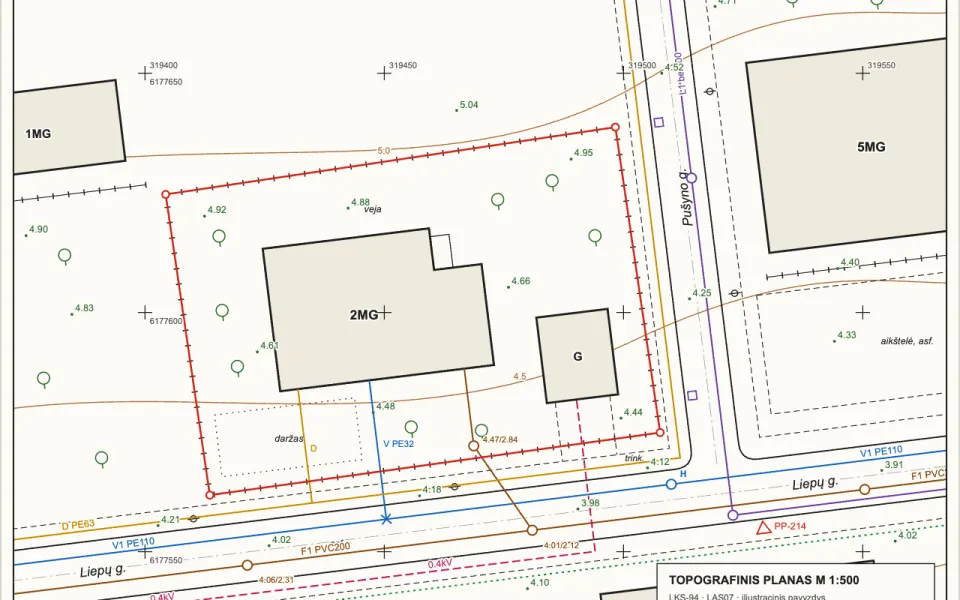
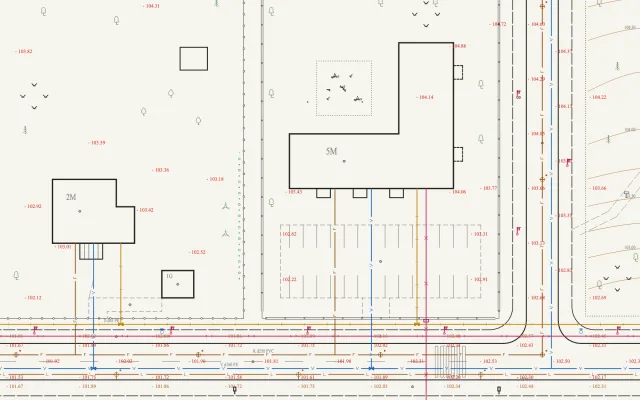
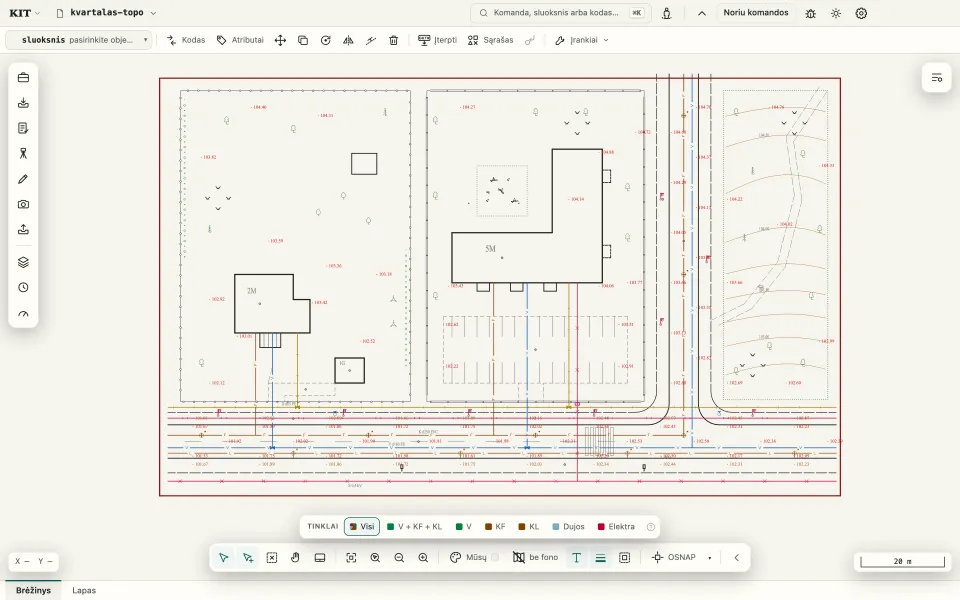
A street block as the surveyor draws it: linework, symbols and heights. Made-up data.
What it is
Drafter opens any drawing. This is the same engine with a surveyor's knowledge added: the national base map and orthophoto under the drawing in the right projection, every code and symbol of the 2023 topographic standard, a map from the old layer names to the new codes, and pickets laid straight from a measurement with their number, height, date and surveyor in the attributes.
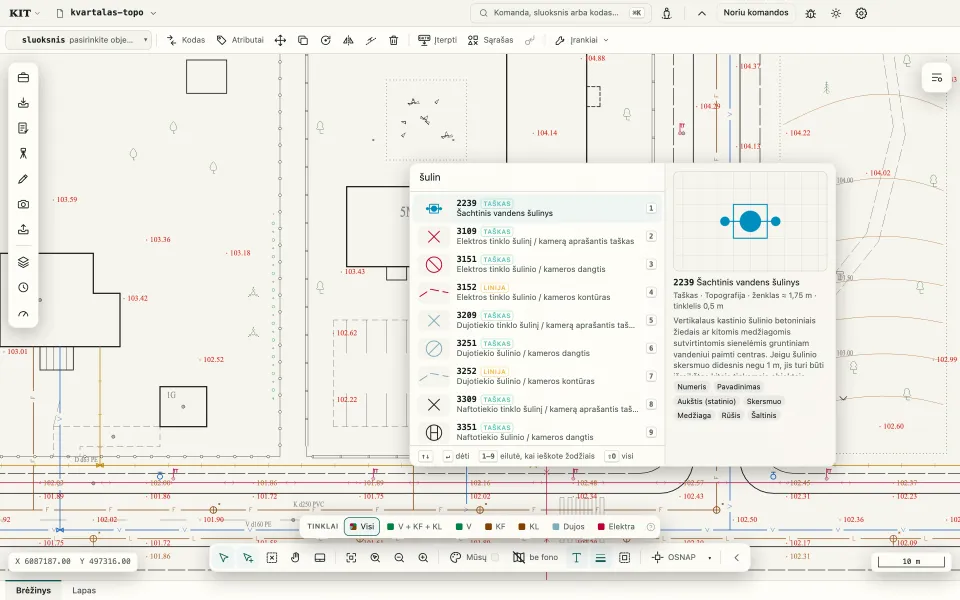
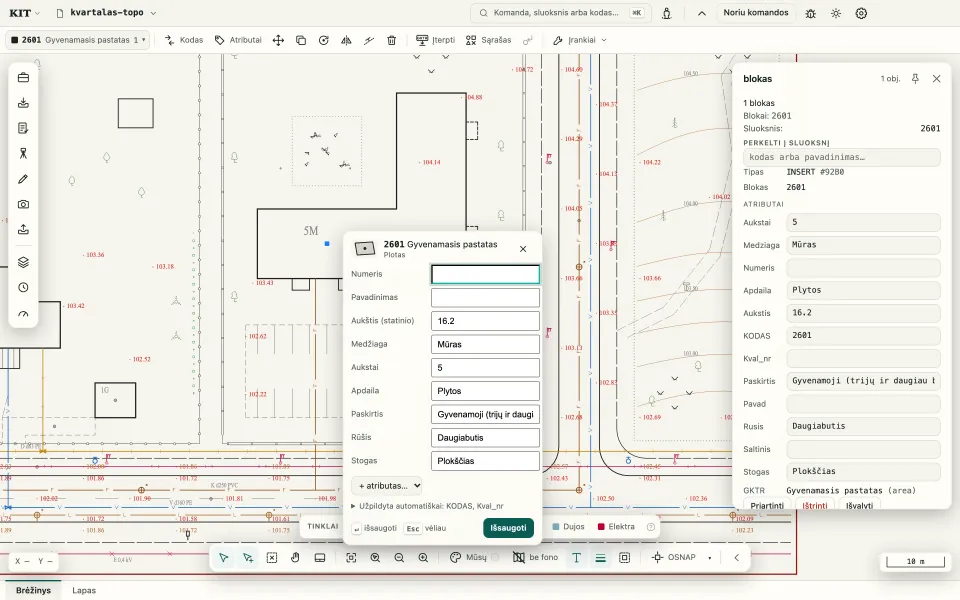
Click a building and its attributes come up in plain words.
How it works
Before a plan goes to the state register, 27 checks written from the standard and the register's manual go through it: units, projection, layer equals code, no arcs, closed areas, one-millimetre joins, flow directions, well numbers. Edits are patched into the original file so untouched bytes stay untouched, and the DXF opens cleanly in AutoCAD.
Layer equals code. No exceptions, and a check that says so.
Type a word, pick the object.
Where it came from
It is the browser successor of IT-Tools, the AutoCAD toolset I wrote for the same firm from 2005. The engine was cut out of it in November 2026 so that Drafter and an interior design tool could share it.
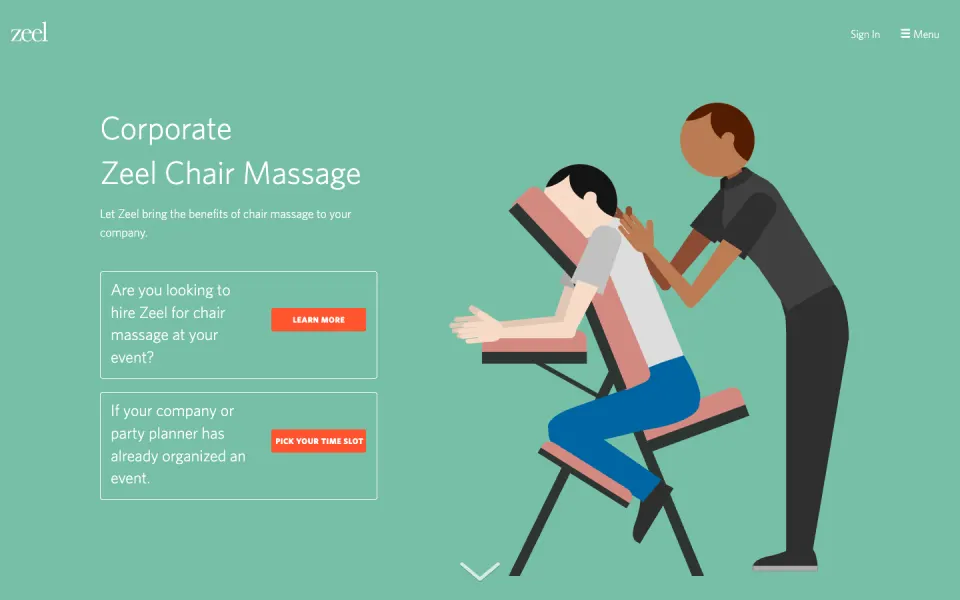
The "v4" homepage, 2015. All pictures here are Zeel's public pages as the Internet Archive kept them.
2012: the first site
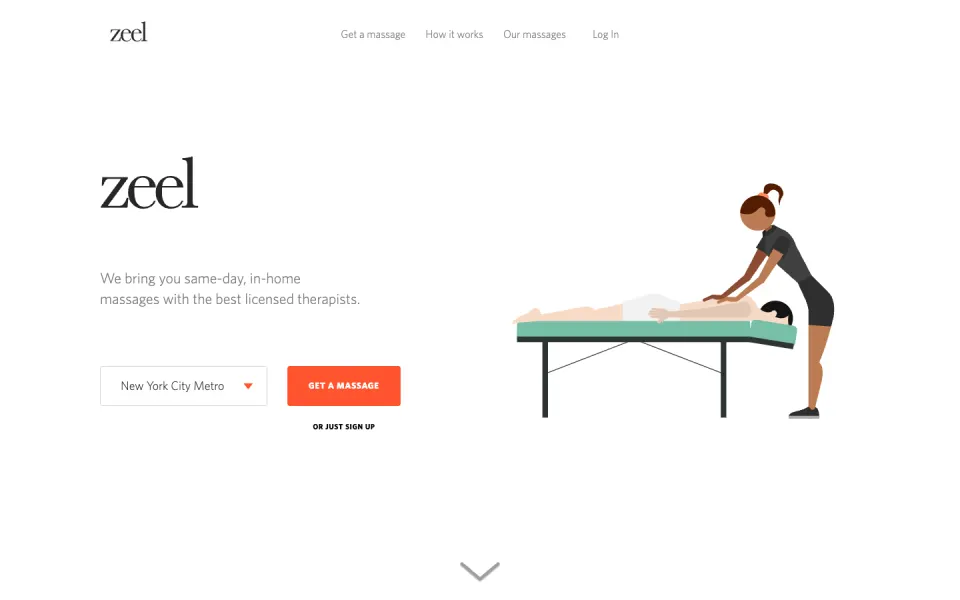
Zeel sends a licensed massage therapist to your home the same day. I joined in May 2012 as the sole front-end developer of the first booking site and took it from zero to a live marketplace in New York City, on PHP, jQuery Mobile and a Sass and Grunt pipeline.
The first year built the first of everything: two-way texting between customers and therapists in real time, a hybrid Android app for office and chair massage, and the daily operations tools for appointments, chair credits, schedules and reports. In 2013 I wrote the first provider app, the one therapists used to take work, in AngularJS on Cordova.
zeel.com, May 2013. Therapists' portraits cropped out.
2014: redesigns, subscriptions, Apple Pay
As senior engineer I led the full-stack redesign of the consumer site: the responsive homepage, the booking flow that carries the revenue, the city pricing pages. Zeelot, the first subscription, shipped end to end. Apple Pay went live in 2014; gift cards and packages followed. Twilio did the talking: texts, click-to-call and call queues for member services, and chat between members and therapists.
Underneath, the habits that kept the codebase alive for another decade: PHPUnit, test-driven development, continuous integration, an API test framework, and a home-made ORM I co-wrote and the code still runs on.
One codebase that was never thrown away.
Gifts, July 2014.
2016: a team and a cloud
Now leading remotely, I built the engineering team from scratch and led the move from Rackspace to AWS: auto-scaling servers, a managed database, automated deploys instead of hand-run releases, and Docker for every developer and every build. Pages got faster, and bookings that slow pages had been losing came back.
Chair Events opened a new line of business: a self-booking API with Salesforce behind it, for companies that book massage in the office and later for spa partners. PHP 7, a rewritten front end and a migration system that has run over a thousand changes to the database came in the same years.
Chair massage for companies, 2015.
2018–2026: wellness becomes healthcare
For the last eight years I led all of engineering, five to eight people across regions. We moved the marketplace onto an event-driven platform of Python services with a FHIR clinical record under HIPAA, and connected the PHP core to it rather than rewriting booking and billing. That made room for medical lines from 2020: VA referrals and medical massage, COVID testing and vaccinations, physical therapy, and a study for the Department of Defense.
The customer site moved to React, the provider app to one React Native codebase, payments from Braintree to Fortis in 2024 with Apple Pay and Google Pay and payouts to providers. In 2025 seventeen services and nine libraries became one repository, and the team began working with coding agents under the same rules of tests and review.
The provider app on the App Store, 2022.zeel.com in 2019, after the move to React.
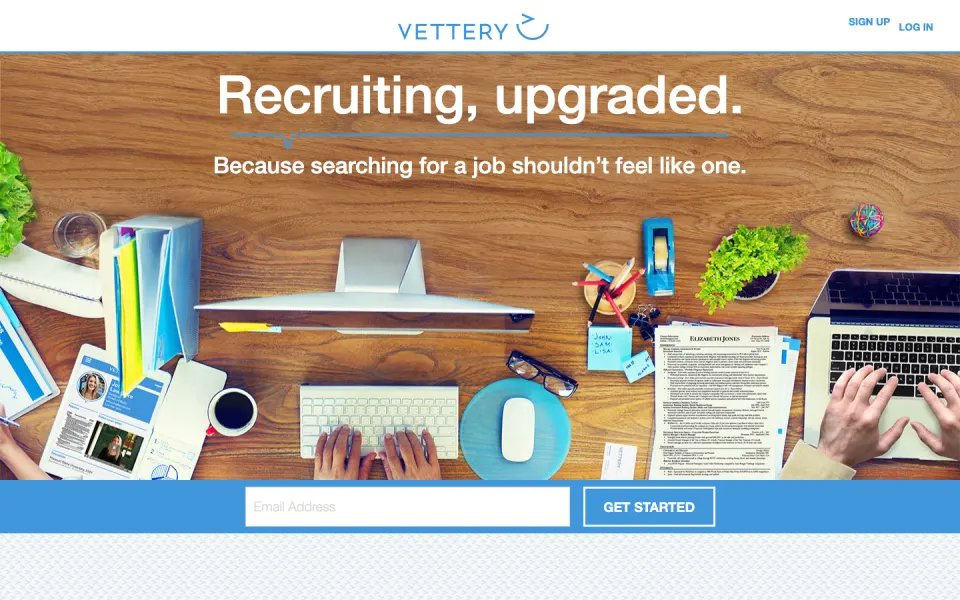
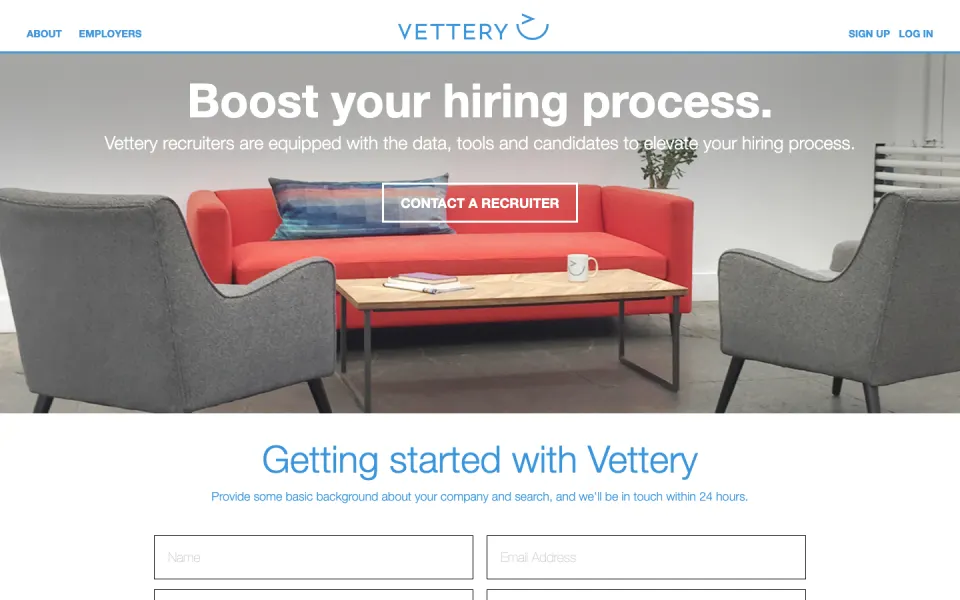
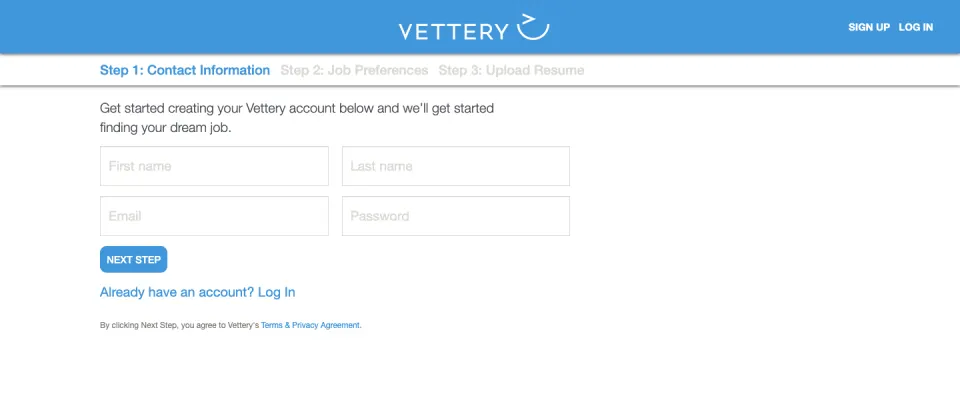
Vettery turned recruiting around: candidates signed up once, were vetted, and companies came to them. In 2014, alongside my work at Zeel, I built the front end for its launch: the home page, the step-by-step sign-up for candidates and the profile pages.
Sign-up in three steps, 2015.
Because searching for a job shouldn't feel like one.
What became of it
The site grew an employers' side within months, and the company went on to be acquired by the Adecco Group. The pictures are the public site as the Internet Archive kept it.
Where it started: nine years of turning a surveyor's measurements into drawings that pass the national standard, inside AutoCAD Map.
Client
A land survey firm in Klaipeda
Built with
AutoLISP and Visual LISP, DCL, ObjectARX (C++), .NET (C#), MySQL spatial
Size
68,852 lines in 63 files; 283 commands; 82 dialogs
Successor
The browser tools of 2026 (see Tools)
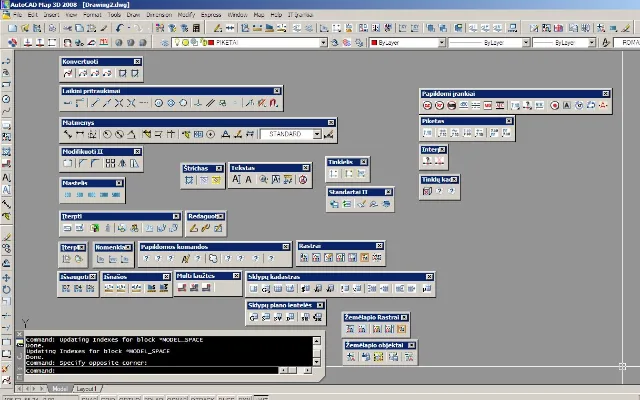
Every toolbar out at once, AutoCAD Map 3D 2008.
What it was
Before there were web apps in my life there was AutoCAD. At a land survey firm in Klaipeda I wrote the toolset the whole office drew with: import from the measuring instruments, topographic plans drawn to the national standard, well cards, land valuation, and a standards check that read a whole drawing and listed every object that broke a rule.
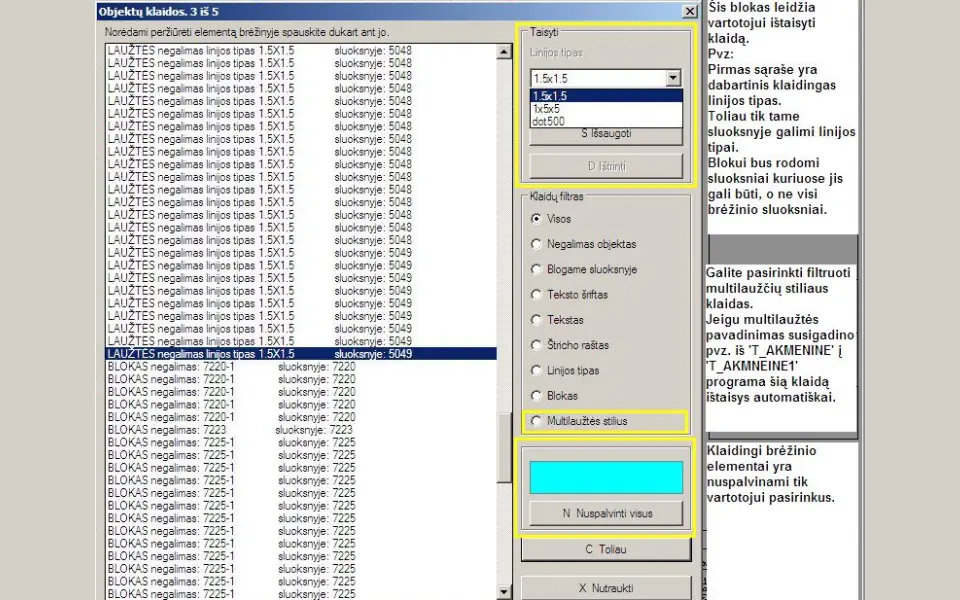
The standards check, step 3 of 5, with the notes I wrote for the users.
How it worked
68,852 lines of AutoLISP in 63 files: 1,041 functions, 283 of them commands. 82 dialogs and 167 toolbar buttons. Where LISP was too slow there were add-ins in C++ (ObjectARX) and C#, and a MySQL spatial database of 34 tables behind it all.
Twenty years later, the same firm's tools run in a browser.
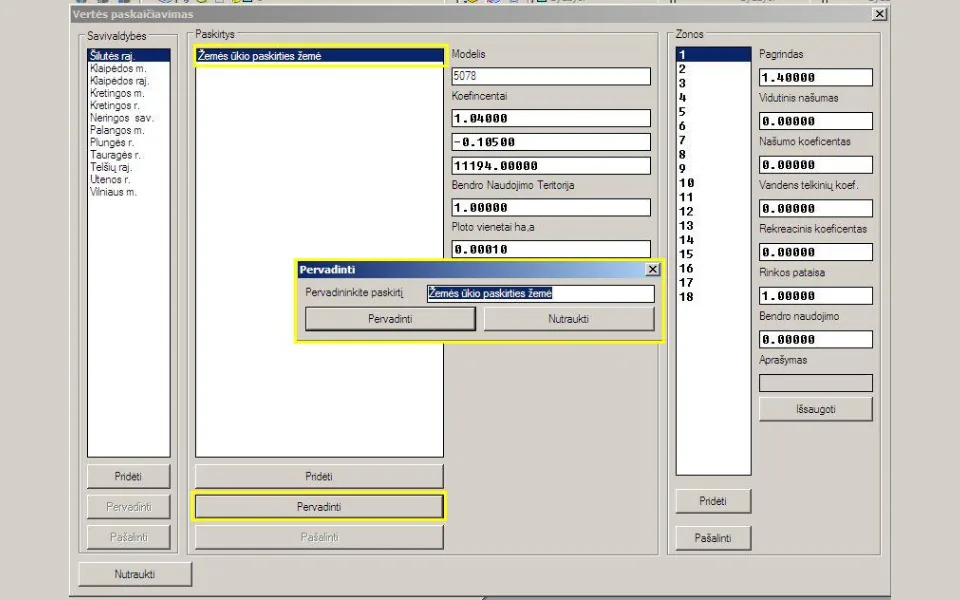
Land valuation.
What became of it
Its ideas are now the firm's browser tools: the instrument import, the drafting engine behind Drafter, and the surveying layer on top of it.
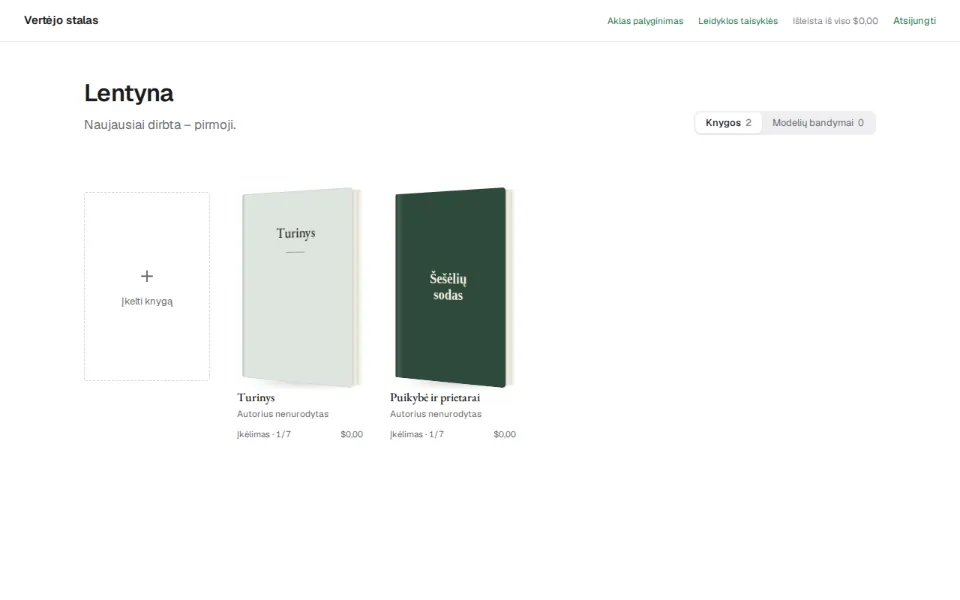
An editor that takes a whole book from PDF to a finished Lithuanian translation: machines draft, a person decides.
Client
A Vilnius publisher
Status
In use since November 2026
Model choice
Vertimai, a blind rating room: seven models, invited readers
Built with
FastAPI, React, MariaDB, interchangeable language models
Tests
716 backend, 65 frontend, 32 end-to-end
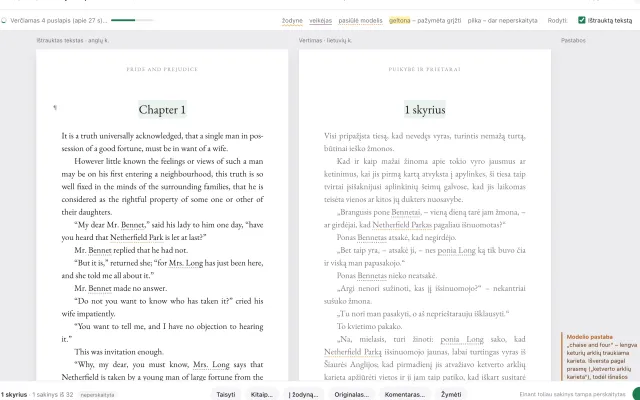
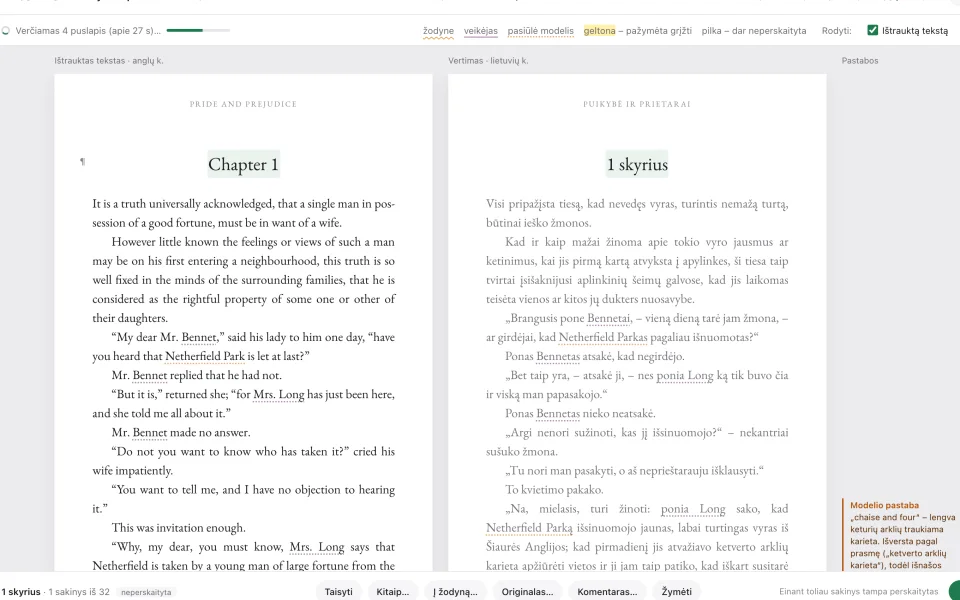
The new sentence editor, in its working prototype: Pride and Prejudice, chapter 1, with a model's note in the margin. Jane Austen is out of copyright and has not complained.
What it is
A publisher translates books from English into Lithuanian. The editor takes a book's PDF and carries it through every stage: import and segmenting, summaries, trials of different models on sample pages, a full draft, human editing paragraph by paragraph, quality checks and export. A versioned glossary and a profile of the book keep names and tone consistent from the first chapter to the last.
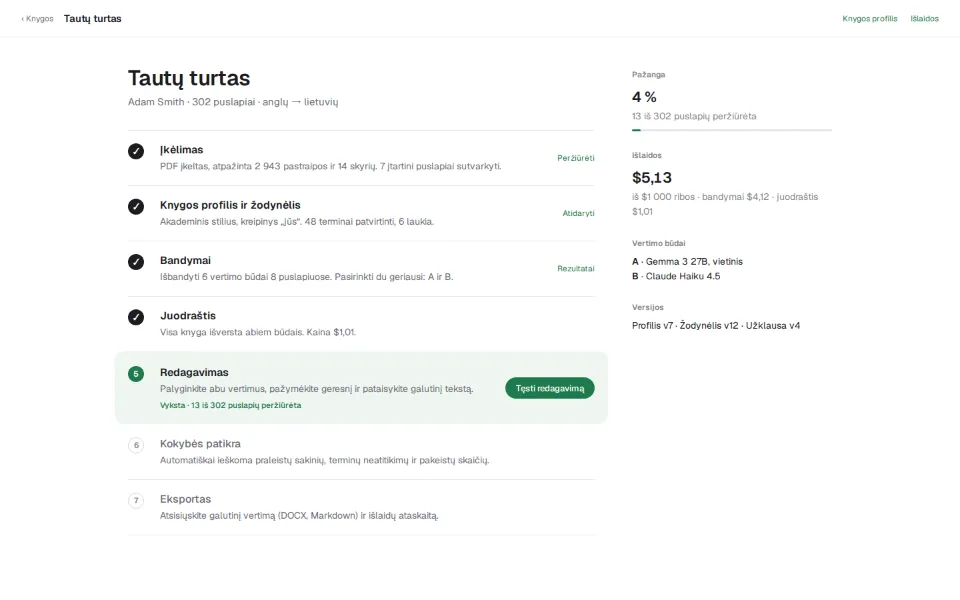
A book's page: the stages, the spending, the versions.
How it works
Language models are interchangeable: local ones and hosted ones sit behind one interface, and every call is entered in a ledger with its cost, so a whole book's machine draft costs a known number of dollars. The editor compares two drafts side by side and the person writes the final text. The new editor goes sentence by sentence: the original on the left, the Lithuanian on the right with every change tracked, the glossary's names underlined and the model's doubts in the margin.
Machines draft. A person decides.
The shelf.
The rating room
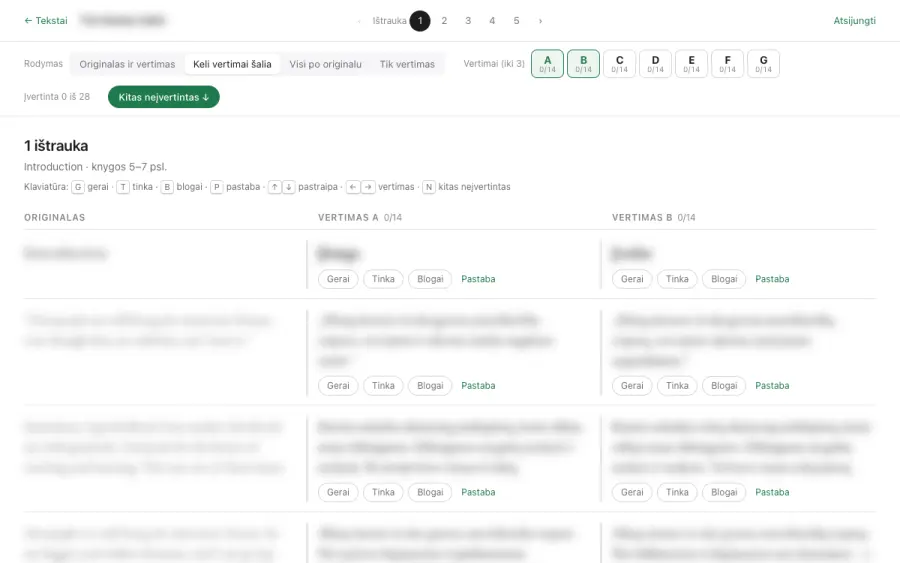
Which model drafts best into Lithuanian was not left to my own eye. In Vertimai, seven language models translate the same passages and invited readers rate every paragraph good, acceptable or bad without knowing which model wrote it: each reader gets their own letters, section by section, so a preference for "the one in the second column" means nothing. That is where the editor's models were chosen.
The rating room. That book is still in copyright, so its text is blurred.
Why
Machine translation is good enough to draft and not good enough to publish. The editor puts both facts in one place.
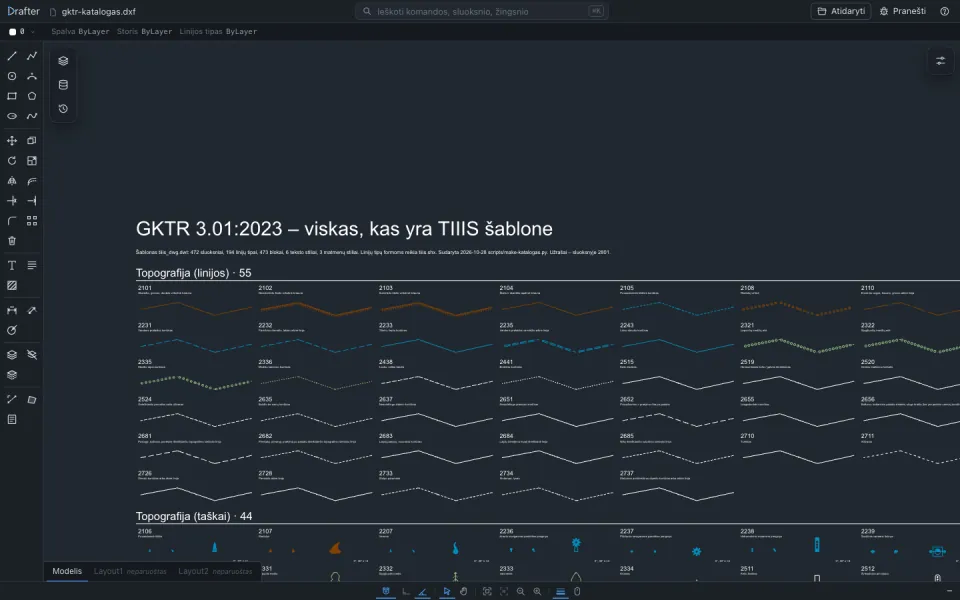
The national catalogue of surveying line types, opened as it was drawn: every dash and dot in place.
What it is
Drafter opens DWG and DXF files, the formats of AutoCAD and of most technical drawings in circulation, and lets you look at them and change them in a browser. Lines, arcs, polylines, text, dimensions, hatches, blocks and their attributes, and paper layouts with their viewports: 26 kinds of object in all, drawn the way their author saw them, down to the stroke fonts the text was set in.
It is built for people who live in drawings: land surveyors who turn measurements into topographic plans, and interior designers who need a clean A3 set for the builders. Neither wants to open a heavyweight desktop program to check a dimension or move a wall.
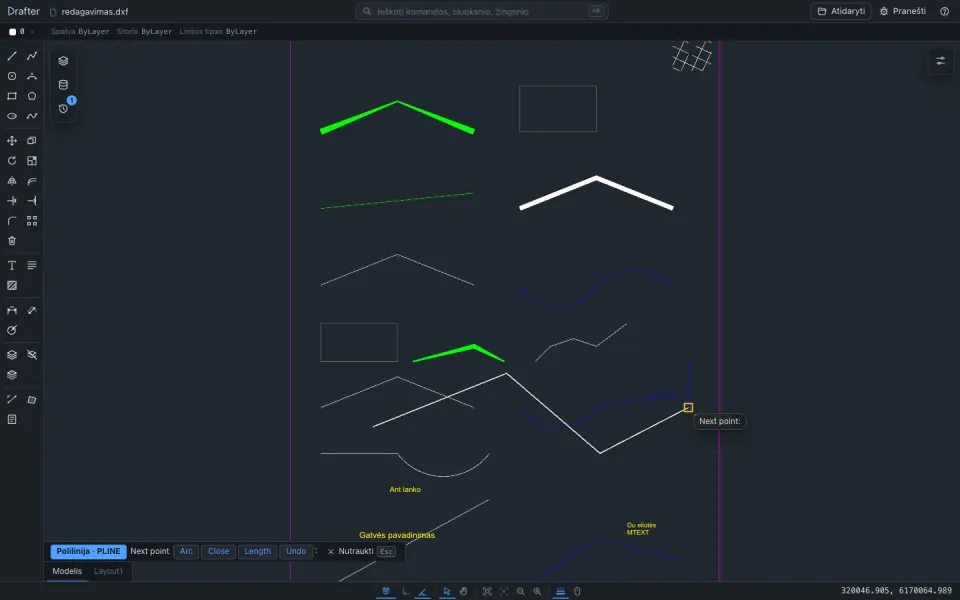
A polyline in progress. The question is asked at the cursor; the choices are buttons, not things to type.
How it works
Underneath is a drafting engine of its own. A reader compiled to WebAssembly takes the file apart in a background worker; the drawing is kept in flat typed arrays and drawn on the graphics card by a renderer written for it. Every change goes into a journal that can be replayed, which makes undo, redo and a reload of the page the same operation: the drawing comes back exactly as you left it.
The 91 commands follow AutoCAD's own names, short keys and order of questions, including the clean-up tools of its Map 3D toolset. Someone with twenty years of AutoCAD in their fingers can type L for a line and carry on. There is no command line, though: the question stands next to the cursor and the options are buttons, which turns out to be easier for everyone else.
Undo, redo and reloading the page are the same operation.
The engine has 1,094 automated tests and serves three sites: the in-house tools of a survey firm, this one, and a tool that makes finished drawing sets for interior designers.
Finding a command. Lithuanian names on the left, AutoCAD's names and keys on the right.
Why
Most of the people who need to read a drawing do not need the program it was drawn in. Drafter puts the drawing where they already are. Saving and printing are deliberately held back for now: they will be the paid part.
As you scroll, the four rooms of the front page part to reveal what the studio does.
What it is
The website of NAMMINI, a studio that designs interiors from the first measurement to the last light fitting and then oversees the works until every piece is in place. The front page is four rooms standing side by side; point at one and it widens, click it and it grows to fill the screen and opens into its project, without the picture ever jumping.
Nine projects follow as a sideways gallery. The services are told in three parts: the concept, the technical drawings and the supervision of the works, each with a picture that changes as you scroll. The site is in Lithuanian, dark, and set in Bodoni Moda and DM Sans.
Technical drawings, sheet 3 of 7. The house turns from a picture into its plan, then into the full set down to the wiring.
How it was made
Plain pages, no framework. A build script writes the pages, cuts every picture into three sizes in two modern formats, and trims the fonts to the letters actually used. The front page opens in about 220 KB and scores 100 for speed in Lighthouse on a phone.
The studio's renders come from many projects and many lighting set-ups. To make them read as one body of work, each was relit to the same evening hour. The result is a portfolio that looks like it was shot on one long, very productive afternoon.
Nine projects, one long and very productive afternoon.
An earlier proposal. Before the pictures arrived, the rooms were built in code and assembled themselves as you scrolled.
The proposals
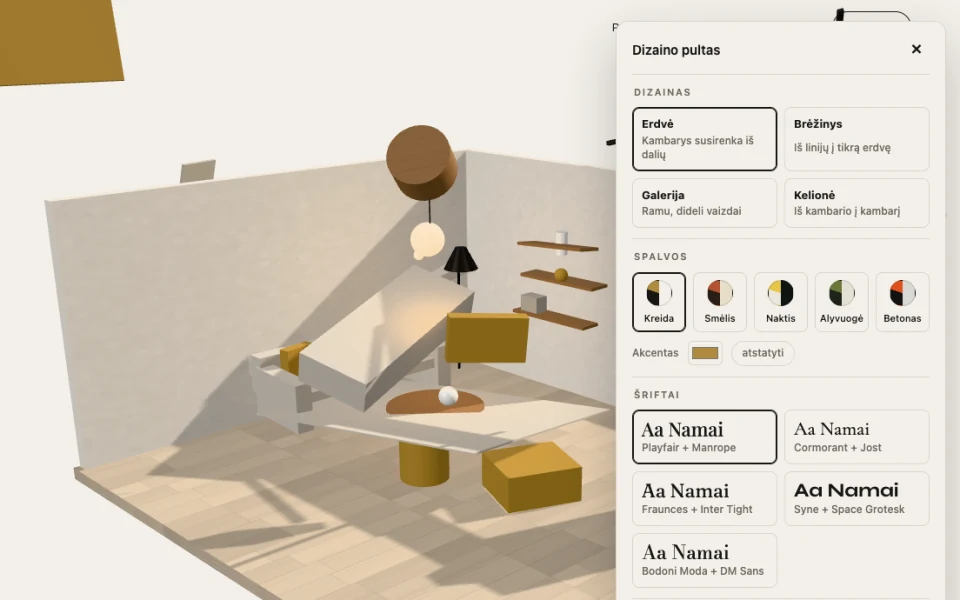
Before any photographs existed, I put four directions to the studio side by side, with five palettes and five pairs of fonts to mix, every combination kept in the address so it could be sent as a link. The rooms in them were modelled in code and flew together, drew themselves as plans, or took the visitor on a walk. The third proposal, built on the studio's own pictures, was chosen.
The shelf. One book open, four waiting their turn.
What it is
Skaitau, Lithuanian for "I am reading", is a reading app for children. It takes books that are out of copyright and retells them in Lithuanian at the level of a young reader, a page at a time. The library to choose from holds 423 books in 29 languages; the rule is that everyone who wrote or illustrated a book died by 1955.
The first book on the shelf is a set of tales from the papyri of ancient Egypt: eight parts, 71 pages. A second volume is retold and waiting to be checked. Nothing reaches the children before an adult has read it.
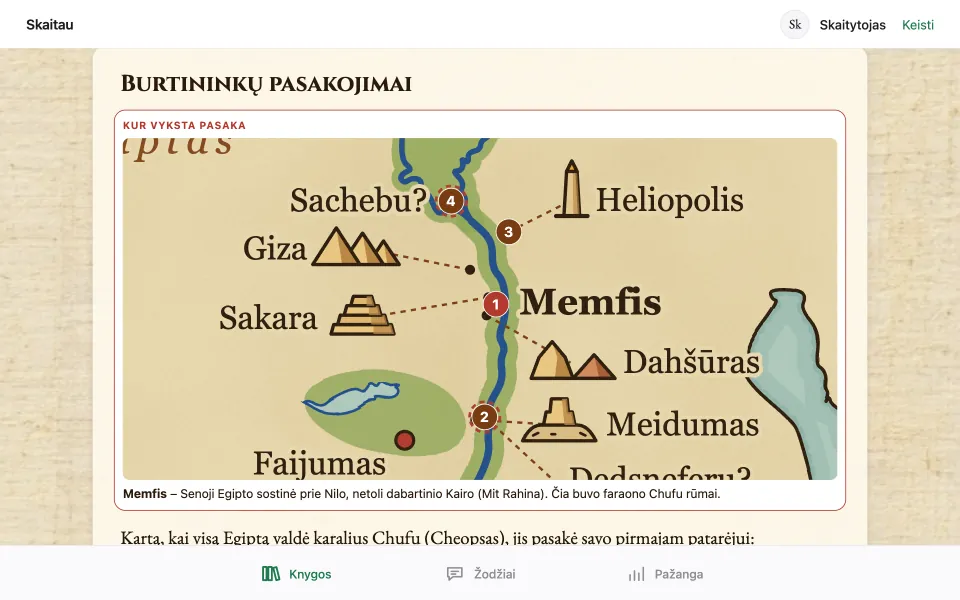
Where the tale happens. Every story opens with its map.
How it works
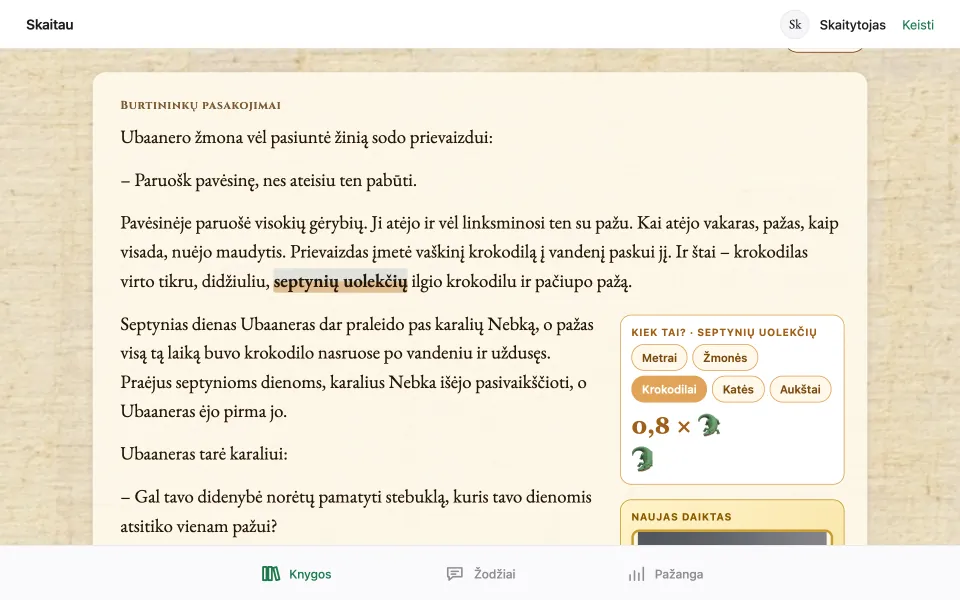
Each tale opens with a map of where it takes place. Hard words are explained where they stand, so the reader never has to leave the page: the first book alone has 41 explained words, 19 places on its maps and 92 cards in its margins. Measurements in the text can be turned into metres, people, cats, storeys or crocodiles. The crocodile is recommended.
Seven cubits: about 0.8 of a crocodile.
On an iPad the whole app is stored on the device and reads without a connection, which matters on a plane. The retelling is done by a language model in drafts, then read and approved by a person.
A measure, converted. Metres are also available.
Why
Good books in Lithuanian at the right level for a young reader run out quickly. The great stories of the world are free; what was missing was someone to retell them at the right height. This is that someone, with help.
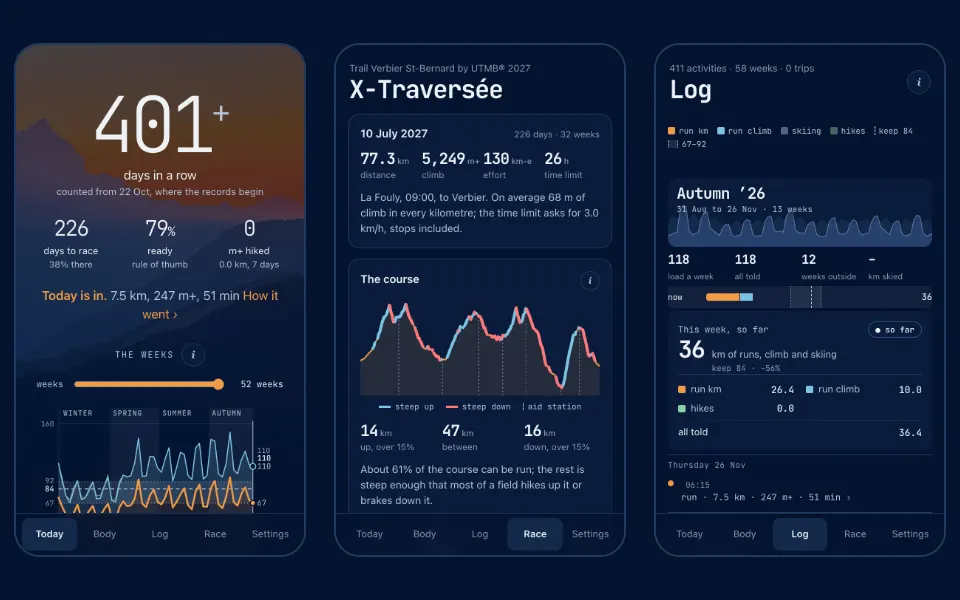
Today, the race and the log. The runs shown are sample data; the course is real.
What it is
Runnin is a training log for a runner who runs every day and is preparing for a mountain race. Mine is the X-Traversée: from La Fouly to Verbier, 77.3 km and 5,249 m of climb over five passes, a short stretch of Italy, a glacier and a suspension bridge, with 26 hours to finish. A quarter of last year's field did not.
Running apps are good at recording and bad at the questions a daily runner asks. Runnin puts the streak first and never suggests a day off; on a bad day it suggests an easy one. Easy and hard are the runner's own word, never a label computed from heart rate.
Today, and the race with its course. Sample runs.
How it works
The watch sends every run to Strava, and the app's server collects them every half hour. Years of earlier runs came from the downloads of three different companies, cleaned so that a run saved twice counts once. A small iPhone app adds sleep and other figures from Apple Health.
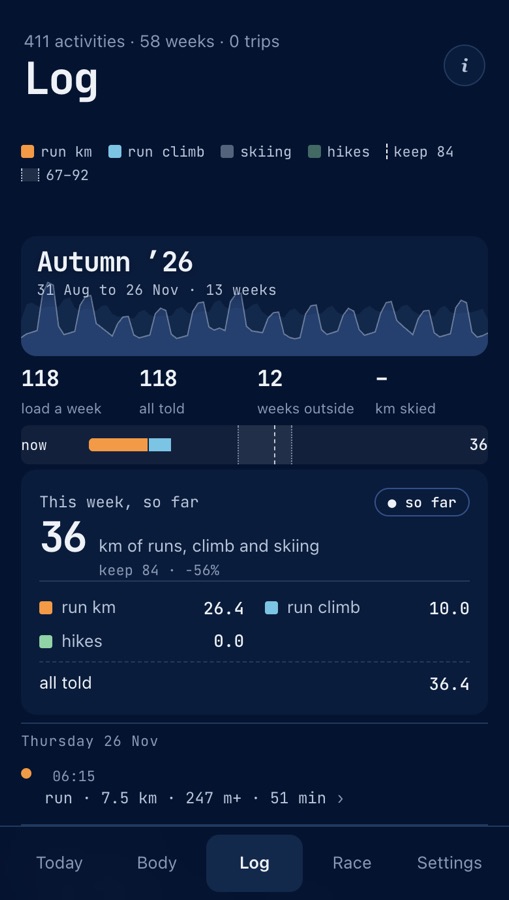
A mountain week is measured in one number: a kilometre for every kilometre run, plus one for every 100 m climbed. The race is 130 of them. Every week is the last seven days against the seven before, never Monday to Sunday, and every rule of thumb on screen is labelled as one.
It never suggests a day off. On a bad day it suggests an easy one.
The season by weeks, and the climbing gathered for the race.
Why
I run every day and have a long day in the mountains booked for July. The apps I had kept recommending rest. This one asks after the run in the words a coach would use, and asks nothing by notification. It is also written for runners other than me: everything personal is a profile.
The chosen design: one book at a time, with its price and an excerpt to read.
What it is
Eugrimas has published books on business, psychology and lives since 1995, and sells some 75 titles through its own online shop. I came in to redesign the shop and stayed to run it: the server, the releases, the fixes, the mail and the monitoring.
On the first day nobody could say for certain what was live. Some 135 jobs later, everything is written down: 335 entries in the work log and 224 in the record of deployments. Every change is tried on a copy of the shop before it reaches the real one.
The shop as it stands in November 2026, before the new design.
The operations
The heavy page builder was switched off in October; the shop is now drawn by its own lean theme. Errors report themselves by email. After someone sent phishing in the shop's name, its mail was signed, so that receiving servers can tell the real messages from forgeries. The shop moved to a new server for about half the old cost, and a rewrite in another stack was weighed carefully and turned down: not worth it at this number of orders.
On the first day nobody could say for certain what was live.
The redesign
I drew twelve designs in four rounds, from the shop's own purple tidied up to a bold black and yellow, with books that stand in three dimensions and open on their real excerpt pages. The shop chose one. A fifth round carried it through every page, down to the cart and the checkout with its real delivery options. It runs on a test copy, scores 93 to 99 for speed on a phone, and waits for the word to go live.
A design from the second round. The books have depth.
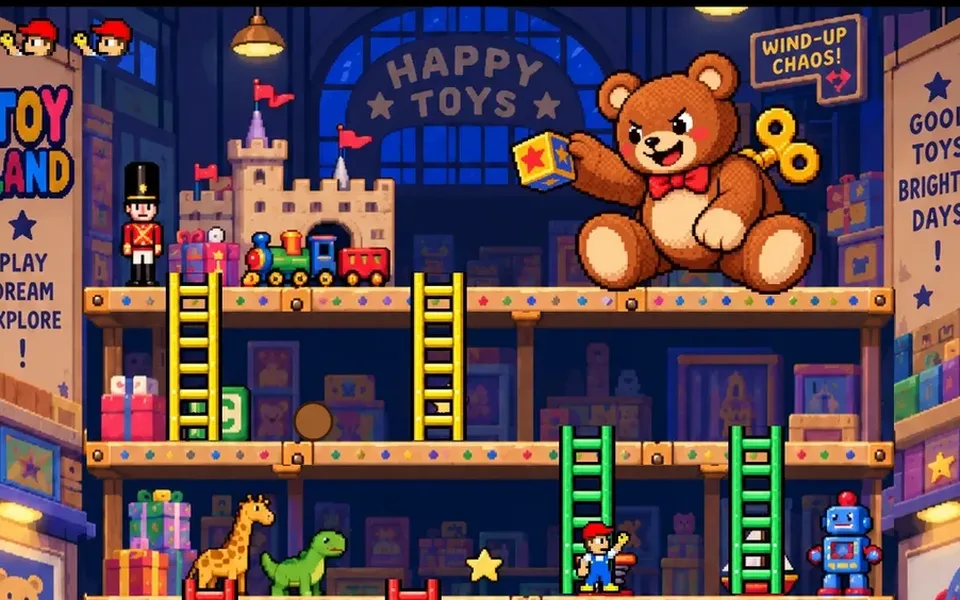
A climbing game in the tradition of the 1981 arcade classics. The hero climbs the shelves of a shop by its ladders, jumps whatever rolls down, avoids the ghosts and, armed with a broom, sweeps them away. Three shops so far, each with its own keeper on the top shelf: an ape in an apron, a wind-up teddy bear and a very angry cake.
The toy store. The bear is wound up.
How it works
No level is drawn by hand. Each is built from a number: the shelves, the ladders and the stock are laid out by rules and then dressed in the shop's own pictures. The same number always builds the same shop, which makes levels easy to share and easy to test. Every value of the hero's jump is still on a slider in the developer's version, because the feel of a jump is never finished.
The same number always builds the same shop.
When a player finds something wrong, they press a button. The report carries every key they pressed, so the game can be played again exactly as it happened, step by step, until the fault shows itself.
The bakery. The cake is not pleased.
Why
Games are the best way I know to learn about feel, timing and fairness, and the most honest testers are players who just want to reach the top shelf.
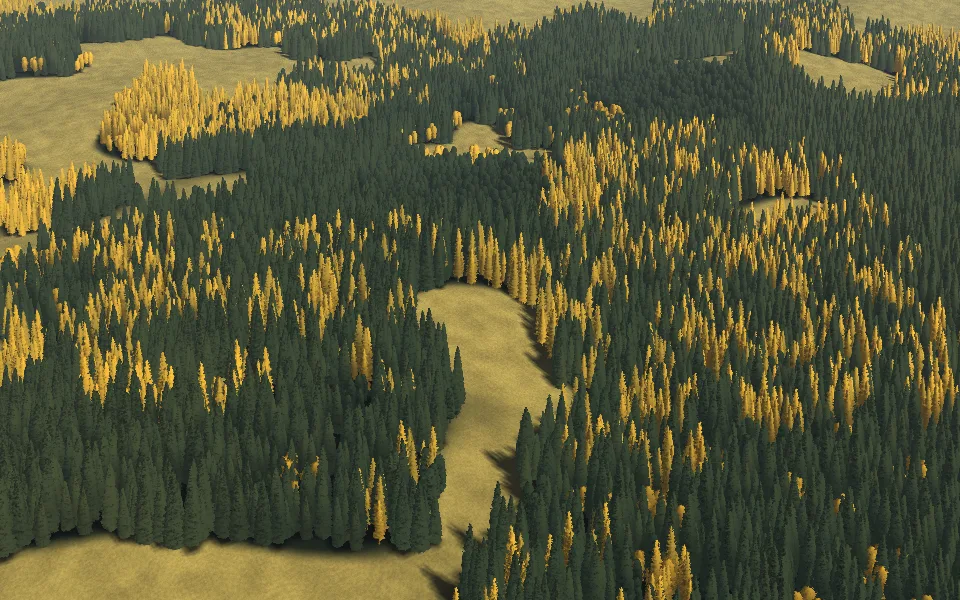
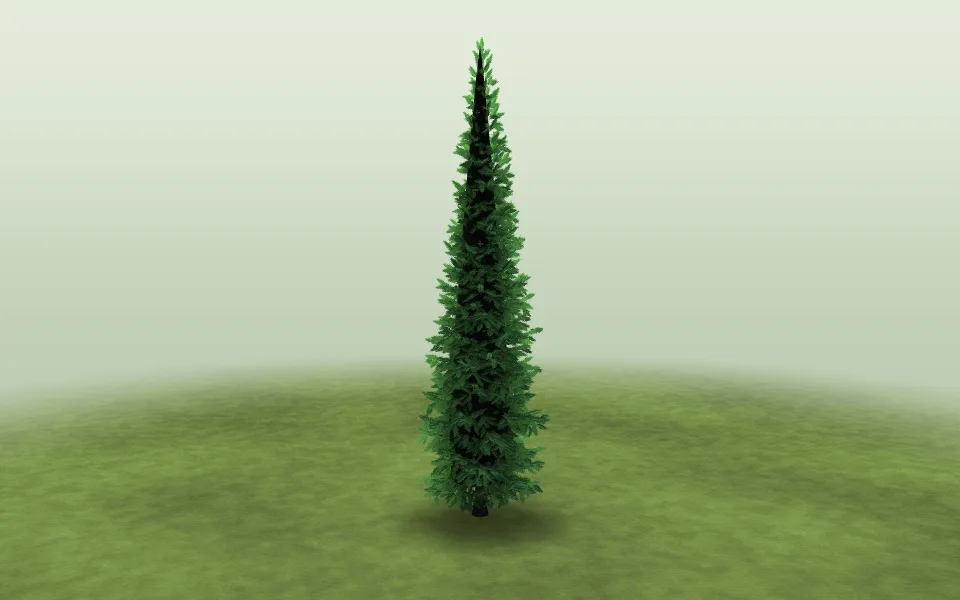
A stand in autumn. The larch has turned; the spruce never does.
What it is
A study of the woods above Verbier, made to answer one question for the Verbier map: how should a forest look from a kilometre away? Four species grow here, each from a number and a set of rules, when it is asked for. The same number always grows the same tree, so nothing has to be stored.
The goal is the far view. In my photographs of the mountain the spruce stand so close that no ground and nothing behind them shows, and the colour depends on whether the sun is on them. The first drawings did neither: you could see straight through the crowns, and the green was far too cheerful.
Specimen No. 1. Norway spruce, 25.3 m.
How it works
A few specimens are grown in full detail and photographed by the page itself from 64 directions. From then on each tree is a card that faces the viewer and shows the right photograph, lit by the sun of the moment; further away, a whole clump of trees becomes one card. Between levels the change is dissolved pixel by pixel, so the eye never catches the switch. A dark core inside every crown stops the eye going through it.
Up to 685,000 trees on one slope, and you should not be able to see through any of them.
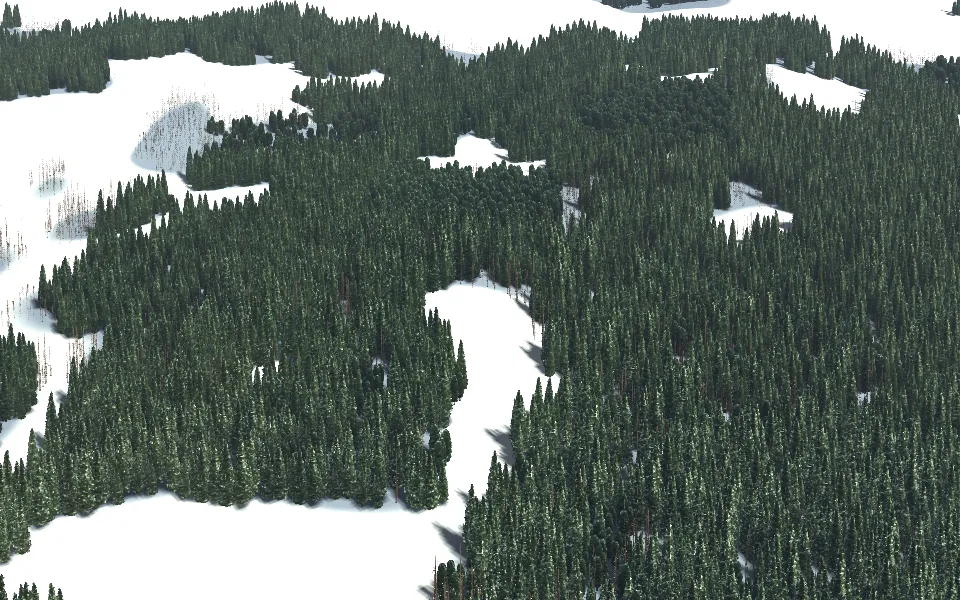
The wood can be made some seven kilometres across. Parts of it are one species alone, parts are mixed, as real woods are. The colours of each season come from schemes chosen by eye against ten photographs of the real place, and snow is laid on each tree where it would actually settle.
The same stand in winter. The larch stands bare.
Where it went
The trees that passed the test now stand on the real ground of the Verbier map, a wood at a time. The study stays open as a place to try new ways of growing and drawing them.
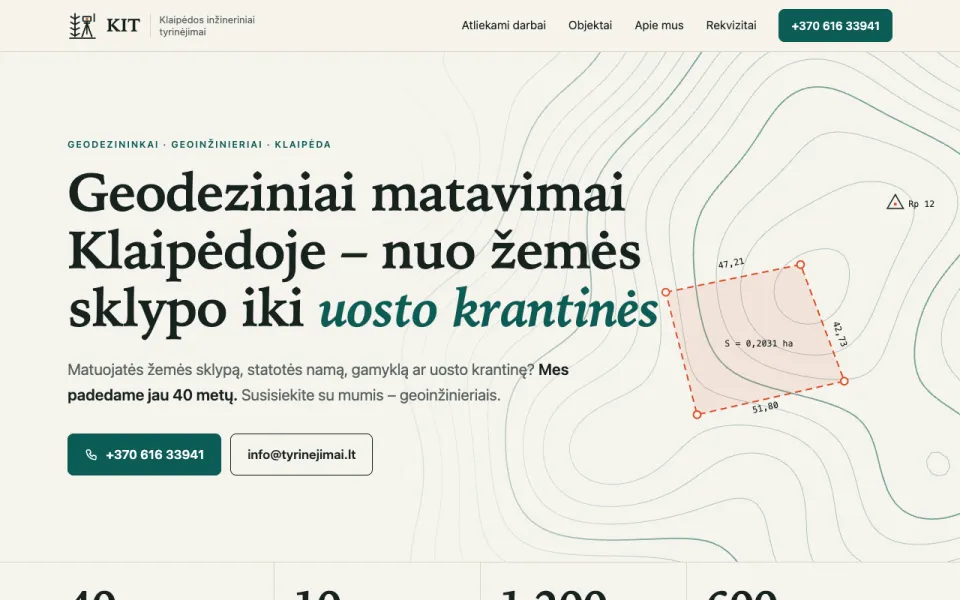
The front page. A measured plot of 0.2031 ha over its contours.
What it is
The website of a firm of land surveyors in Klaipeda: what they measure, a set of sample plan sheets, the largest objects they have surveyed, and how to find them. It is in Lithuanian, with a light and a dark side, and loads in one go: a single file of 167 KB, with nothing fetched from anywhere else.
A topographic plan at 1:500. A sample: the street does not exist.
How it works
The eight plan sheets are not scans. A script draws them, and every number on a sheet is computed from the sheet's own coordinates, so the spot heights agree with the contours and the dimensions agree with the plot. Each is marked as an illustration. A click enlarges it.
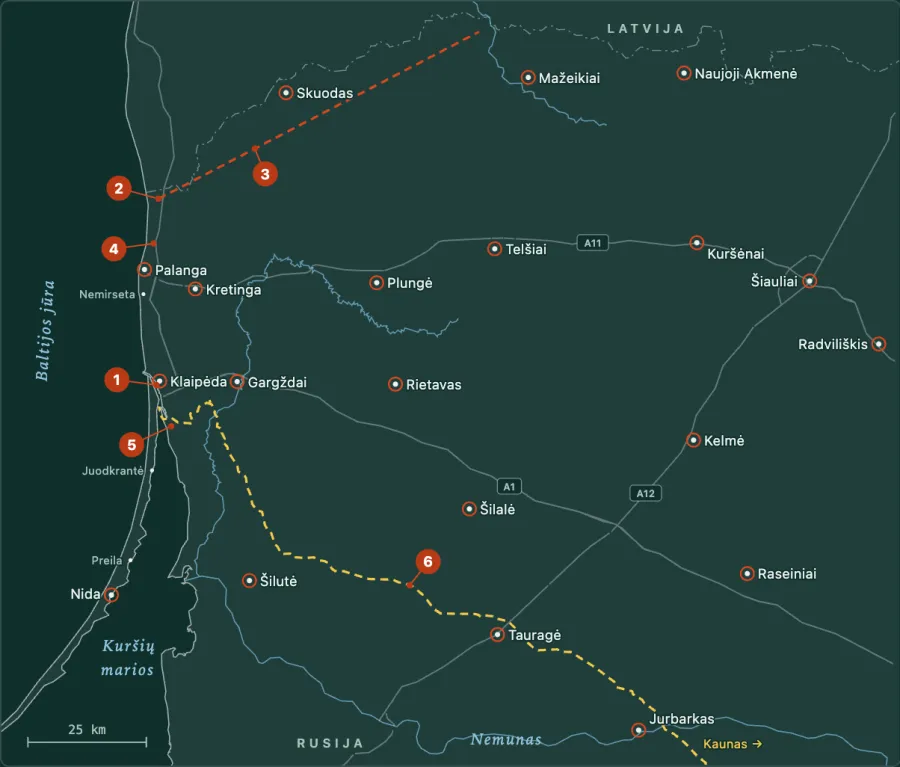
The map of their work is drawn the same way, from OpenStreetMap, in the Lithuanian national grid (LKS-94), from the port of Klaipeda to the oil and gas pipelines inland.
The readers are surveyors. None has reported a coordinate out of place.
Six objects, from the port to the pipelines.
Related work
The same firm uses a set of browser tools I build for their drawings. The drafting engine behind Drafter began there.
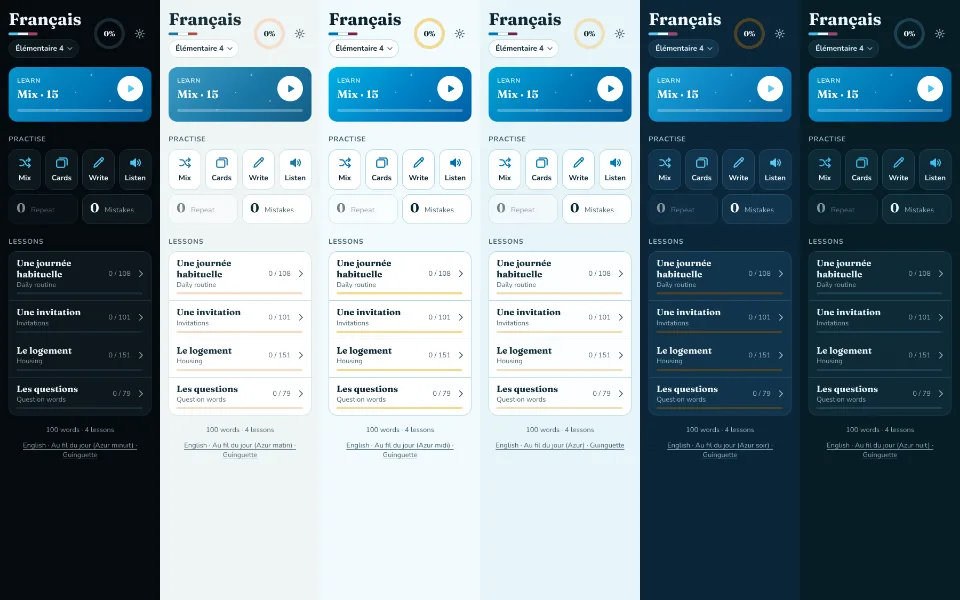
The same page at 3:00, 8:00, 12:30, 16:00, 19:30 and 22:30.
What it is
A trainer for the French I am taught in Geneva. Four courses in 31 lessons and 598 words, each explained in both English and Lithuanian. No lesson has fewer than fifty questions, and some have many more.
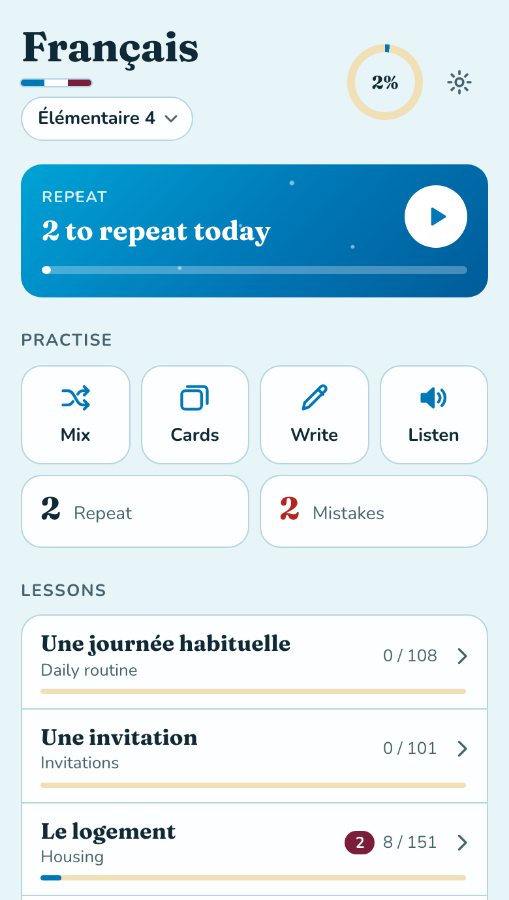
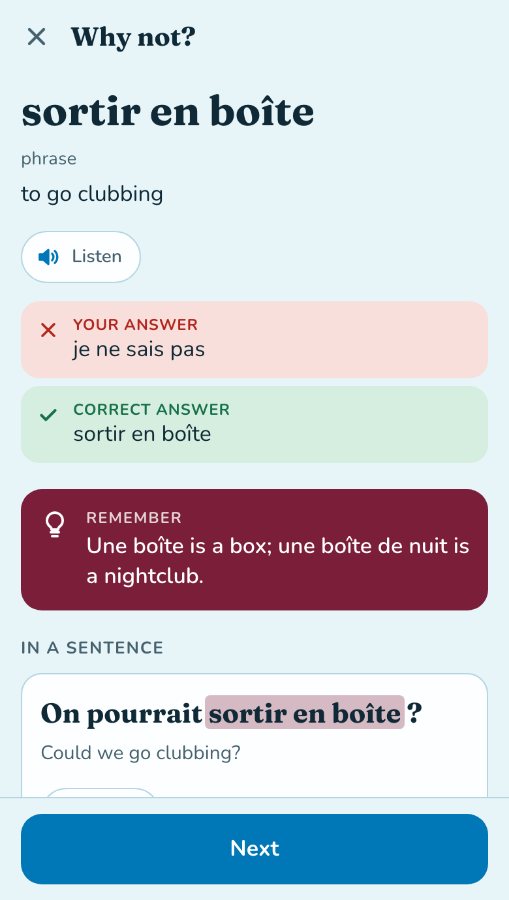
What is due today, and a wrong answer explained.
How it works
A course is downloaded once and then lives on the phone, working without a signal. There are four ways to practise: mixed questions, cards to turn over, writing the word out, and hearing it. A wrong answer is explained on the spot: what was meant, why, and the word used in a sentence.
Whatever you answer comes back: a miss the same day, a hit after a day, then three days, then a week. The schedule is simple on purpose; the point is to keep showing up.
The page keeps the hour of the Côte d'Azur.
The colours follow the sun over Nice: pale at breakfast, brightest at lunch, blue at dusk, almost black after midnight. Studying at two in the morning is allowed, but the app will look at you accordingly.
The icon on the phone: a sun over the water.
Why
I live among French speakers. Classes give the material; a trainer in the pocket turns the bus ride into practice.
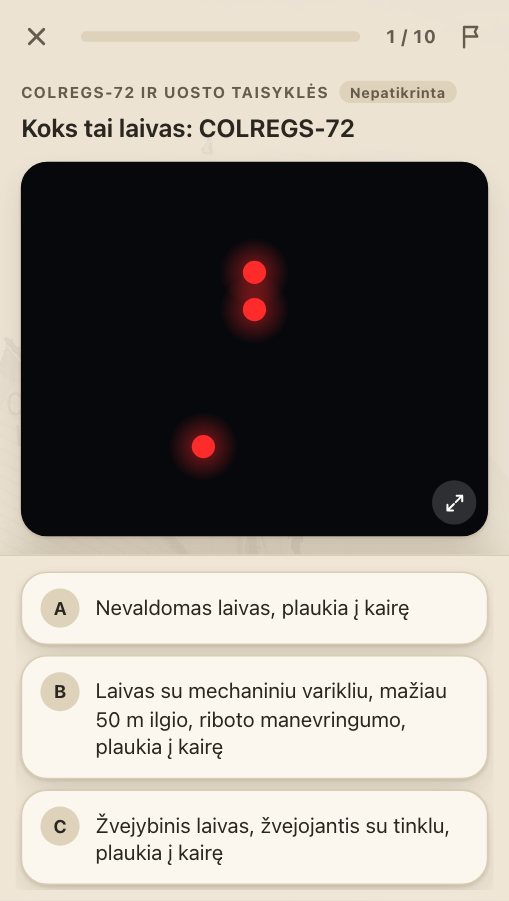
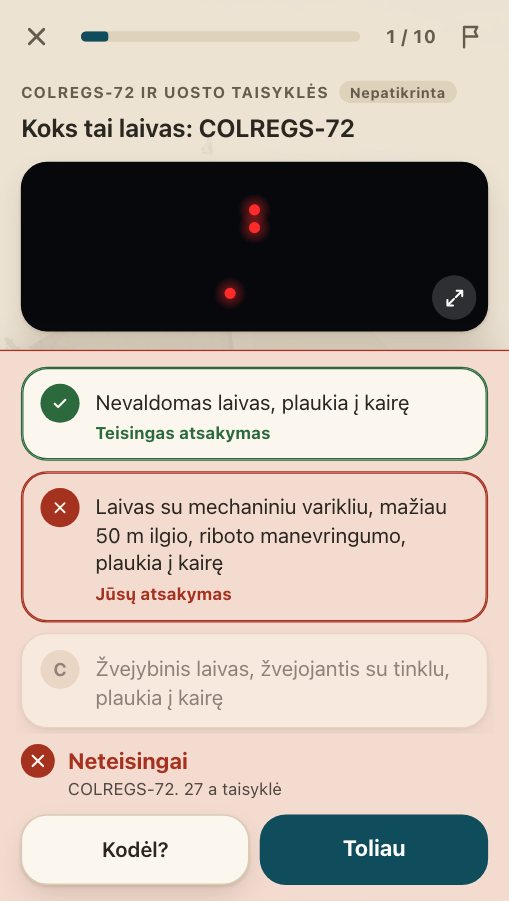
A trainer for the examination for a recreational motor-boat skipper in Lithuania. 1,132 questions in fourteen subjects, 365 of them with pictures: lights, buoys, flags and the rules of the road. 369 come from the course's own question bank; the rest were written to cover the chapters the bank passes over.
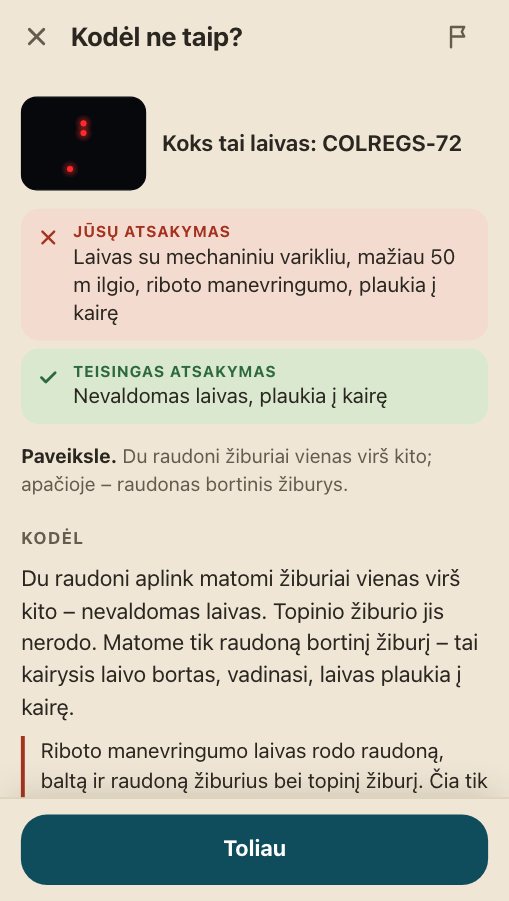
A question on lights, and the reason behind its answer.
How it works
There is a full mock examination drawn from the course bank, a quick round of ten, a round of past mistakes, a round of what is due for repetition, and each subject on its own, with a switch for picture questions only. Every answer is marked at once. A wrong one is explained with the passage of the rules it rests on, the key words highlighted, and a line to remember it by. Questions come in easier and harder versions, and a countdown keeps the examination date in view.
It is built for the phone, keeps working without a signal once opened, and keeps a copy of the progress on the server.
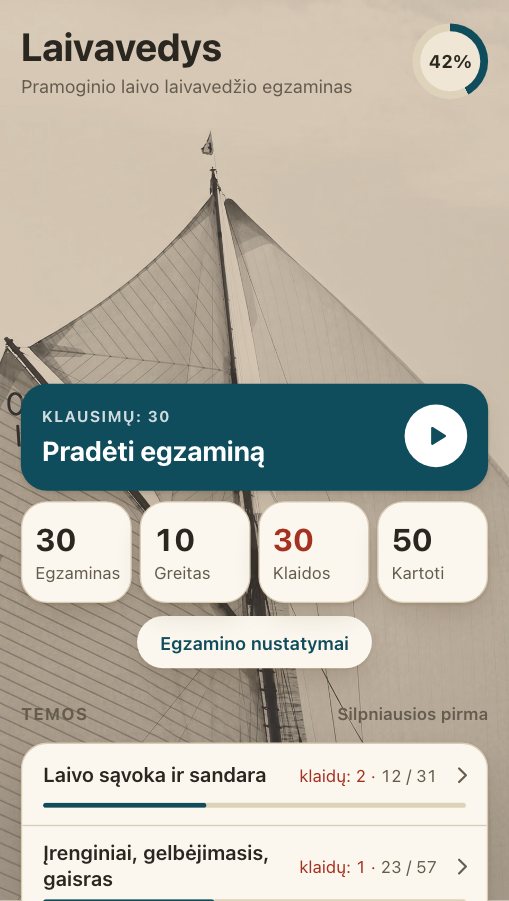
It worked, and looked like any other quiz. Then it was given a mast.
How it was dressed
The first version looked like a form. One picture changed that: a mast and sails, after the cover of Aloyzas Každailis's Laivai ir jūrininkai. The trainer opens on it, then the picture pales into the paper and lies under every page, so the reason for all the study stays in view. A right answer lets it through again for a moment. The full account of the design is published separately.
The real mountains around Verbier, drawn in a browser from survey data: every house, lift and piste where it actually is, and the sun where it actually stands.
Status
Ongoing
Sources
swisstopo, the Swiss National Forest Inventory, OpenStreetMap
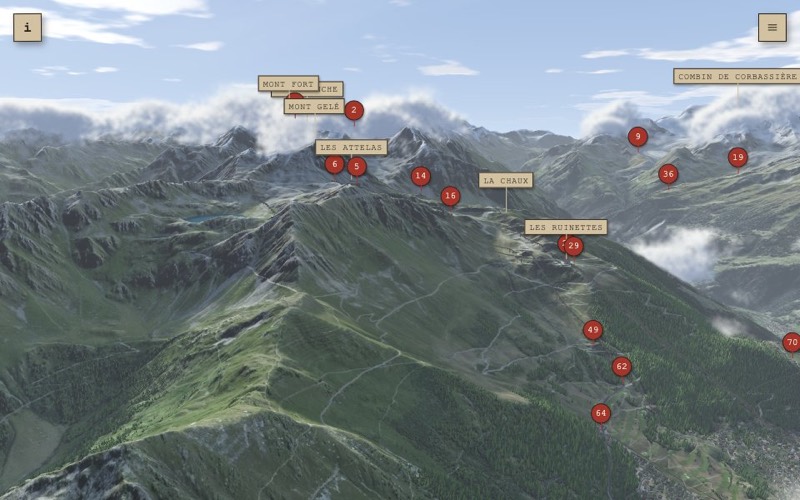
The ridge in summer, peaks named and lifts numbered.
What it is
A map of the ground around Verbier, in the Swiss Alps, in three dimensions, from the valley floor to Mont Fort. The terrain is the federal survey's; the aerial photograph is laid over it; houses, roads, single trees, forests, lifts, pistes and mountain restaurants stand where they stand. It has four seasons, and the sun is where it really is over Verbier at that hour of the day.
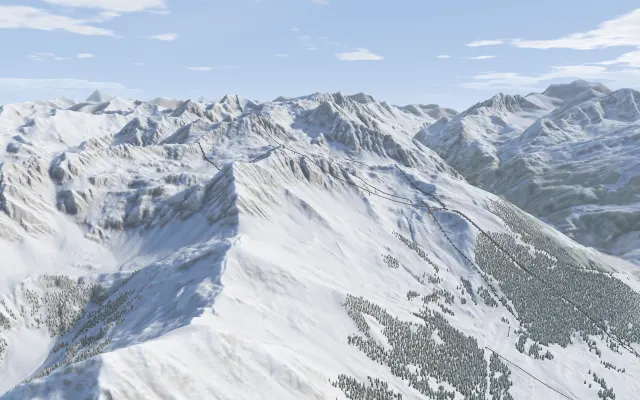
The same ground in winter.
How it works
The ground is drawn as a tree of squares that grow finer near the eye, from 1,600 m cells on the far mountains to 5 m cells close by, without a seam or a jump between them. Houses get their real heights and roof shapes from the laser survey. The shadows of the ground are traced on the graphics card toward the sun; low cloud fills the valleys and caps the peaks; the woods are the trees from the Trees study.
It has to look like a place, not a model.
Drag to look around, scroll to come closer, use the keys to fly. A click on a lift or a piste opens its details, and the search finds anything with a name, from peaks to bus stops. The address follows the view, so a view can be sent to a friend.
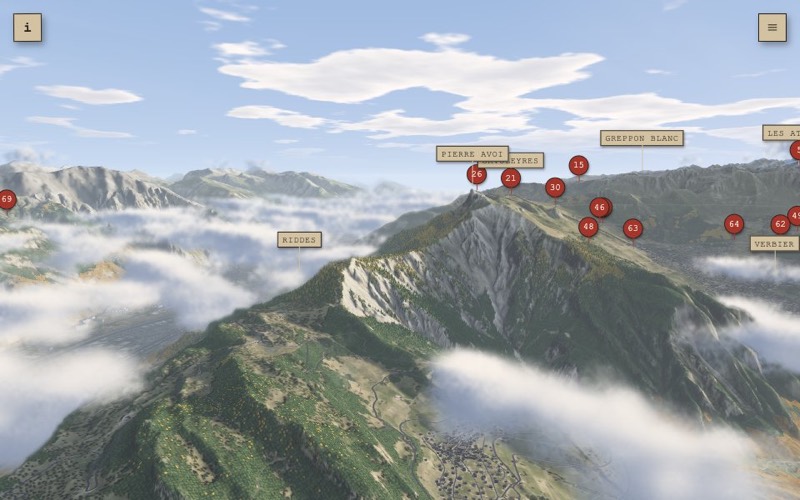
The Rhone valley in autumn.
What is next
People along the real lifts, pistes and trails, and the live state of the lifts. The rule stays the same: everything drawn must come from a real source.
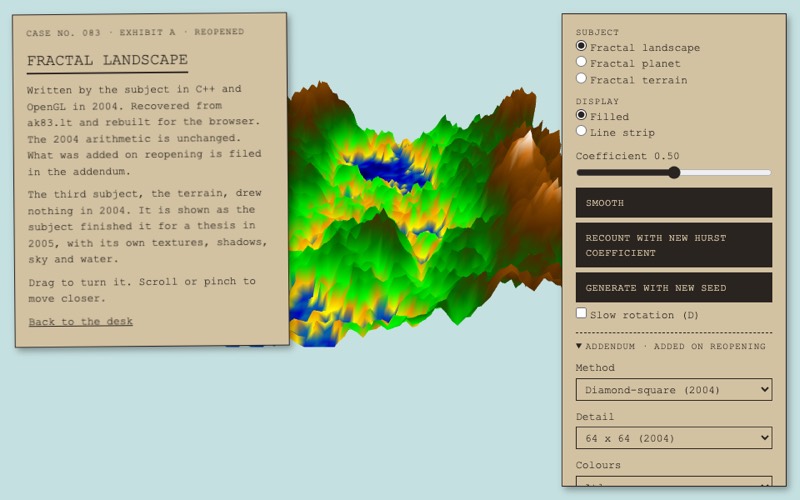
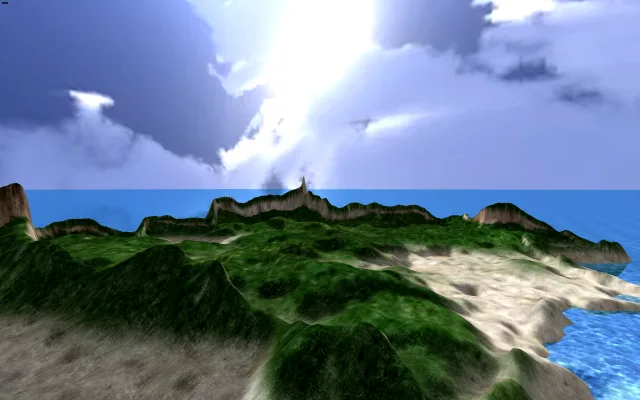
A terrain generator I wrote in C++ and OpenGL in 2004, and the textured terrain I finished for a thesis in 2005, with its own shadows, sky and water. Both were recovered from an old archive and rebuilt for the browser, statement by statement, down to the quirks of the original random number generator. A seed gives exactly the shape it gave twenty years ago.
The 2004 landscape and the program's own menu.
How it works
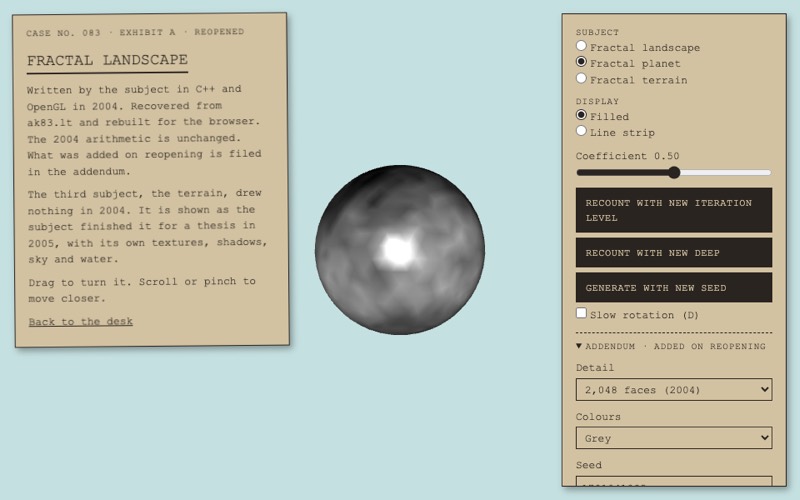
There are three subjects: a landscape, a planet and the thesis terrain. Drag to turn, scroll or pinch to come closer, pick a subject and generate with a new seed. The menu is the program's own, in its original wording.
A seed gives exactly the shape it gave twenty years ago.
Everything the old program did not have sits apart under "Addendum": more ways to generate, erosion, colour schemes, sunlight, trees and levels of detail. With the addendum at its defaults, the page computes exactly what the original did, and that is checked before every change.
The planet. Also not real.
Why
To see whether twenty-year-old arithmetic still stands up. It does. The line landscape behind this page is a distant relative.